

The Editorial Team
A PFC from Company E, 338th Infantry Regiment, 85th “Custer” Division
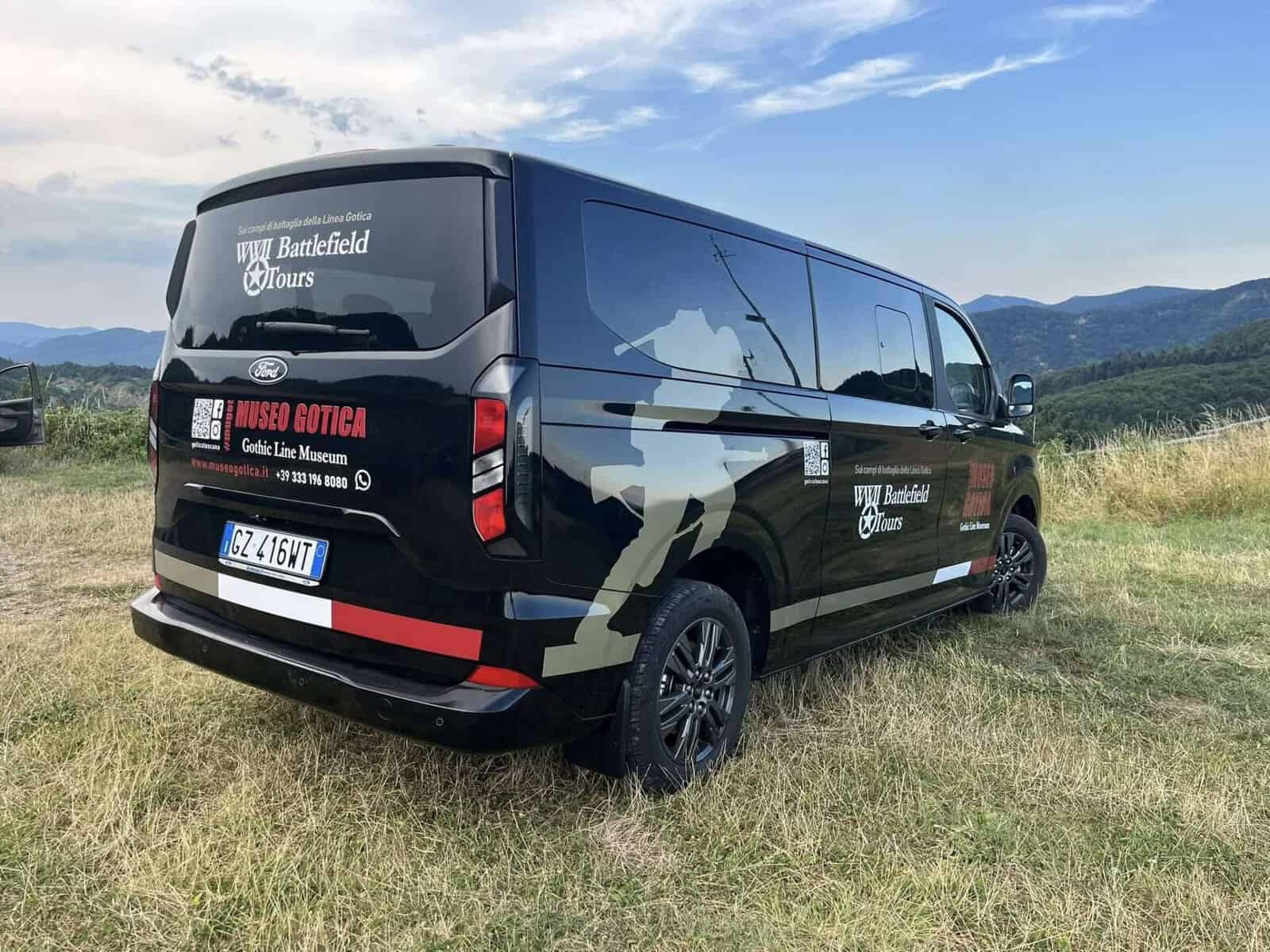
MuGot Battlefield Tours: History Comes Alive
In August 2026, the family of Paul R. McNelis contacted the MuGot with a specific request: during a trip to Italy, they wanted to visit the places where their father and grandfather had fought in 1944 with Company E, 2nd Battalion, 338th Infantry Regiment, 85th Infantry Division. A Battlefield Tour was therefore scheduled for September 15 for four family members, taking them from the Mugello area to the Bolognese Apennines.1
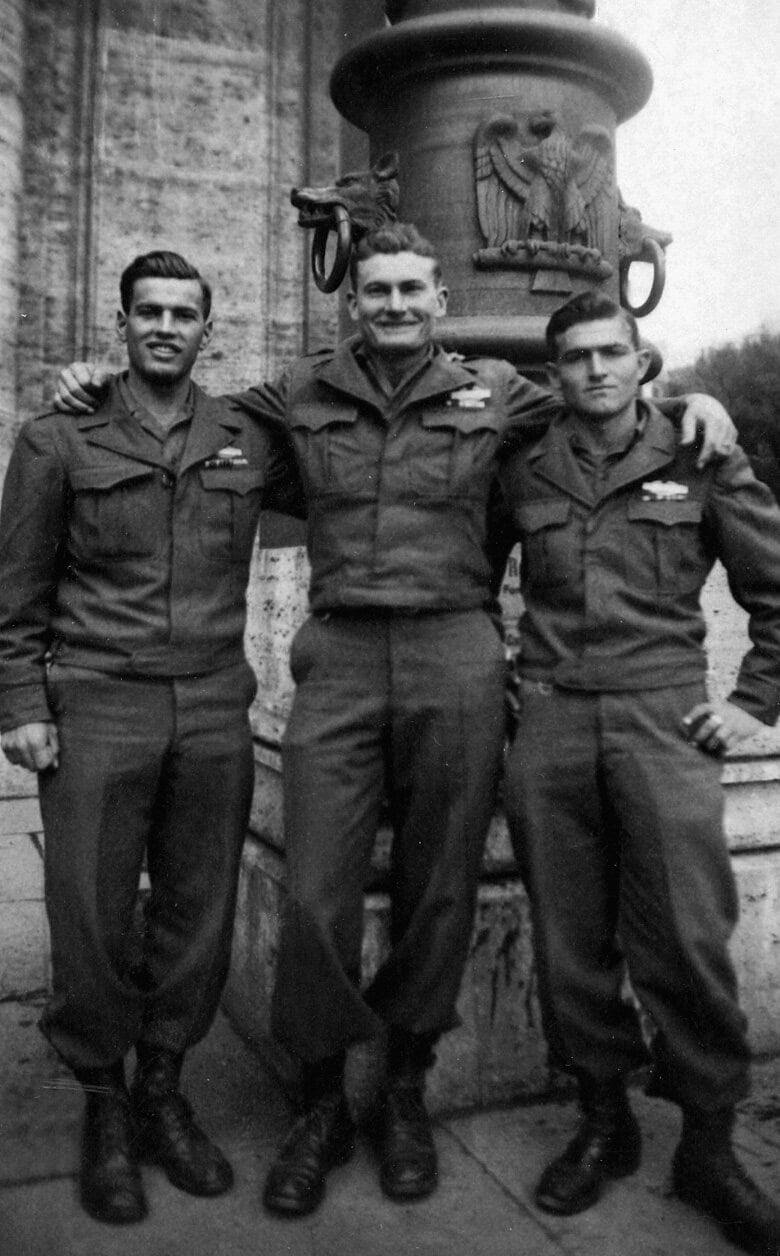
Paul R. McNelis poses in Rome with two fellows
MuGot volunteers Daniele and Leonardo Baggiani prepared the route. Their starting point was the family’s collection of memories and documents and, above all, McNelis’s extensive firsthand account published in 2005 by Richard A. Beranty.2 The account mentions Monte Altuzzo, Firenzuola, a mysterious Hill 754 “due east of Peglio,” Monte delle Formiche, and finally McNelis’s wounding, which occurred at around four in the morning on October 25, 1944. At first, however, the dates and locations do not seem to match. Hill 754 appears to have been confused with Monte delle Formiche, and the family’s recollections also place the wounding in that same area.
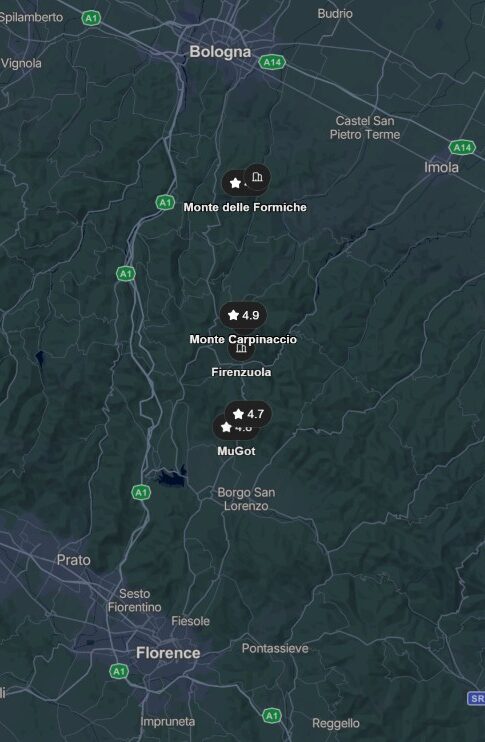
Map of the advancement of the 338th and of the GT Battlefield Tour
The research therefore began by tracing the movements of the 338th Infantry Regiment day by day and comparing McNelis’s account with the surviving military records. The first key piece of evidence came from the 85th Division’s General Orders: Paul R. McNelis, ASN 33572443, PFC, Company E, 338th Infantry, was awarded the Bronze Star Medal for Heroic Achievement for an action carried out on September 24, 1944. The award was formally announced in General Orders No. 66, dated October 26.3 Hill 754 therefore could not have been Monte delle Formiche, where the 2nd Battalion, 338th Infantry, did not fight until October 10–13. A second decisive clue concerned McNelis’s wounding. The 85th Division’s Report of Operations and the reconstructed course of the advance show that, after the capture of Monte Fano on October 20, the 338th moved toward the strongpoints at Pizzano and Orbega.4 It was therefore in this sector, not at Monte delle Formiche, that the October 25 patrol had to be located. McNelis’s description—a downhill movement, a small settlement in front of the lines, a rocky outcrop, a large haystack, and finally evacuation toward the valley floor—made it possible to narrow the search area further to the slopes between Pizzano, Orbega, and the Idice Valley. At this stage, the 1944 military maps also became essential: sheet 98-II NE Firenzuola was used to verify Hill 754, while sheet 98-I NE Monterenzio helped reconstruct the area where McNelis was wounded.5 Documents, memory, and topography thus gradually made it possible to disentangle events that, more than eighty years later, had become superimposed in recollectio
The Battlefield Tour grew out of this research:
not simply as a visit to the places where the 85th Division fought, but as an attempt to follow, on the ground and as far as the surviving sources allow, the path of a single soldier. From the Gothic Line to the hills south of Bologna, in the footsteps of Paul R. McNelis.
With the 338th Through the Gothic Line
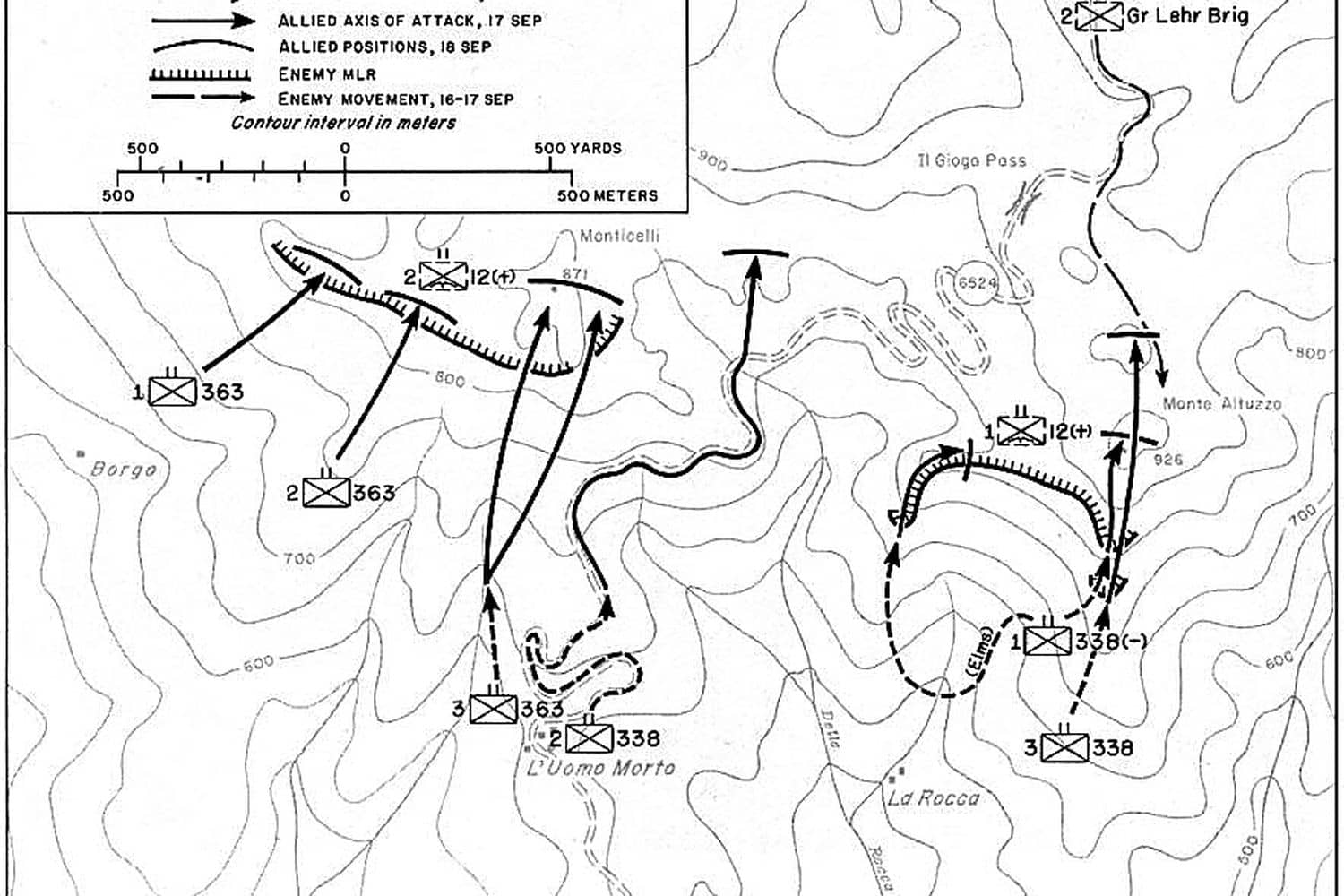
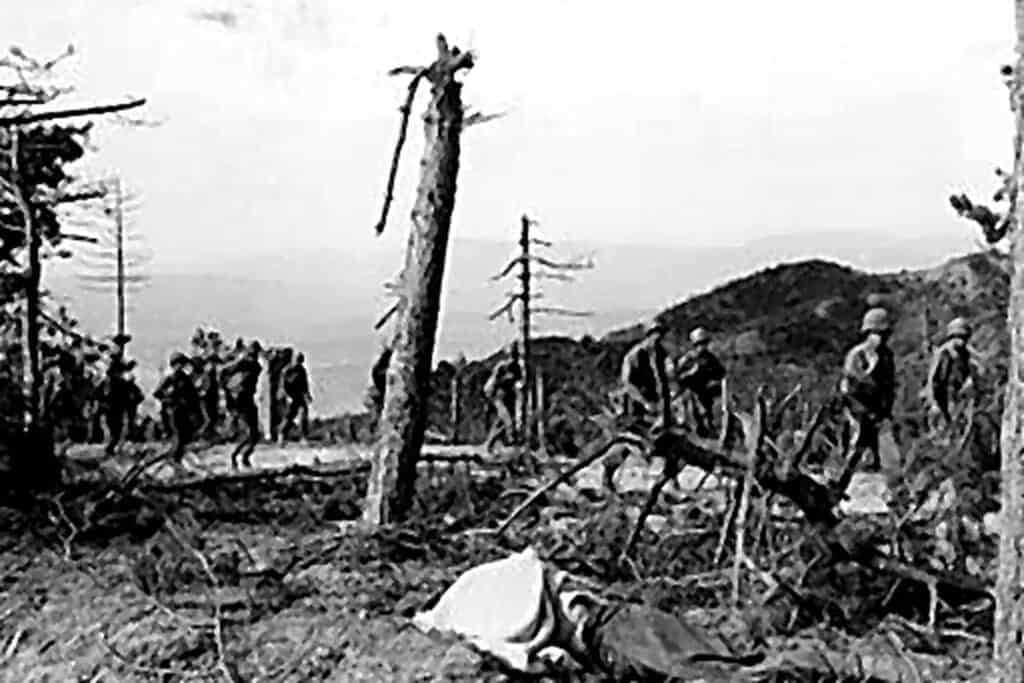
On September 13, 1944, the U.S. Fifth Army attacked the Gothic Line in the Mugello sector of the Apennines. Three American divisions were committed along the II Corps front: the 85th Infantry Division in the Giogo Pass sector, the 91st Infantry Division toward Monticelli and the Futa Pass, and, farther west, the 34th Infantry Division. After days of fierce fighting, the German defensive system was breached. On September 17, the 85th captured Monte Altuzzo, and in the hours that followed, the German withdrawal opened the road to Firenzuola for the Americans.6 The breakthrough, however, did not mean that the battle was over. Ahead of the American divisions still lay an Apennine landscape of narrow valleys, difficult roads, and an almost continuous succession of ridgelines. The Germans withdrew northward fighting as they went, placing small infantry detachments, machine guns, mortars, and artillery on commanding heights and at key choke points in order to slow the pursuit. Each time the Americans took one position, they almost invariably found another waiting on the next ridge. It was the kind of war McNelis himself would remember many years later: climb a mountain, drive the Germans off, descend, and begin again on the next one, while patrols constantly searched for an exposed flank or a weak point.7
-
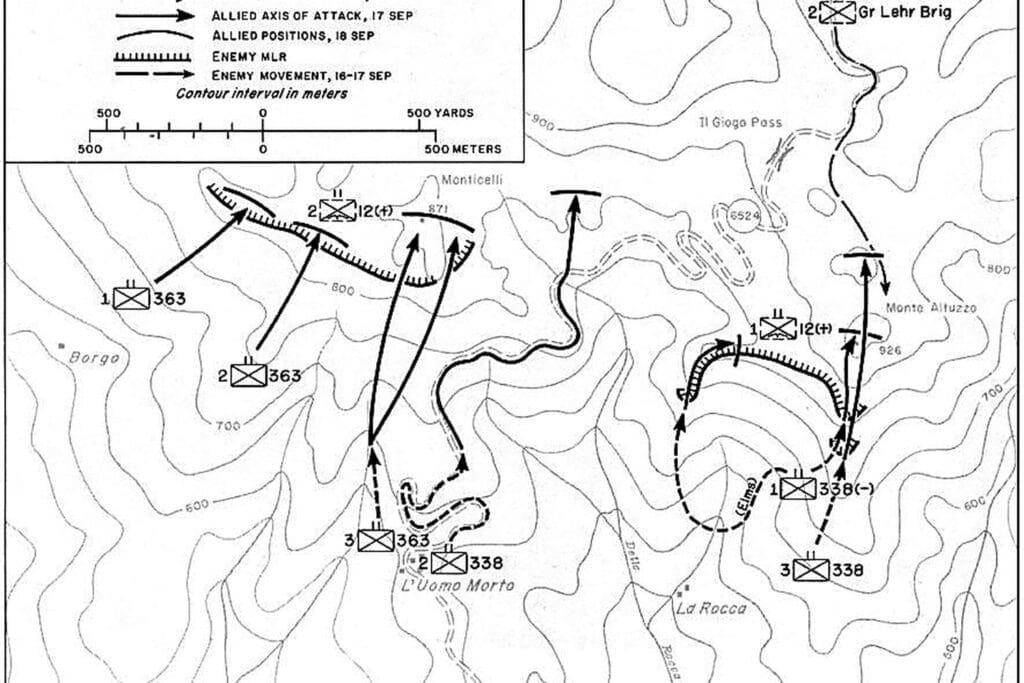
- Attack to the Mont Altuzzo scheme
-
- 338th Infantry after the breaktrought
-
- On the top of Giogo Pass – Gothic Line
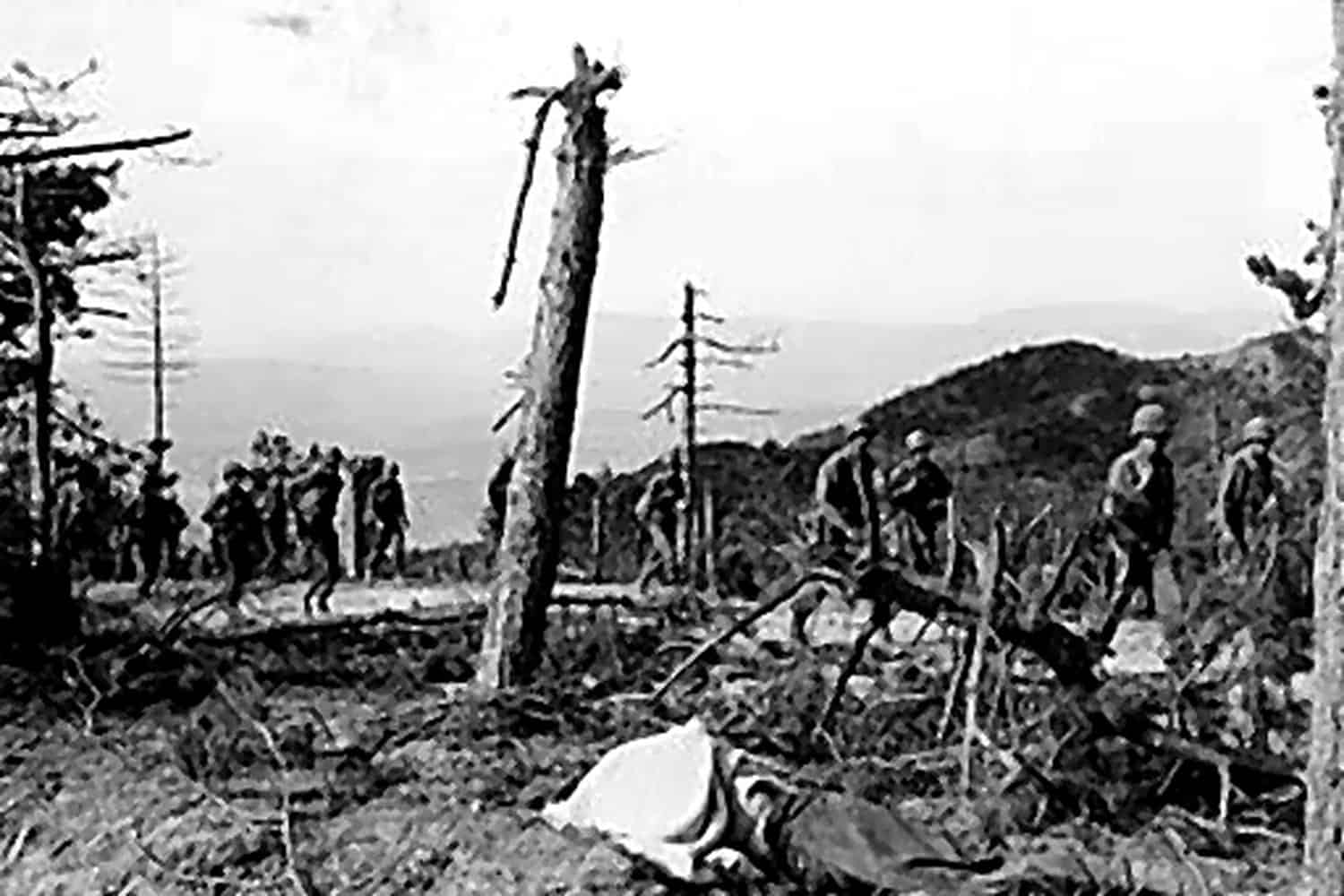
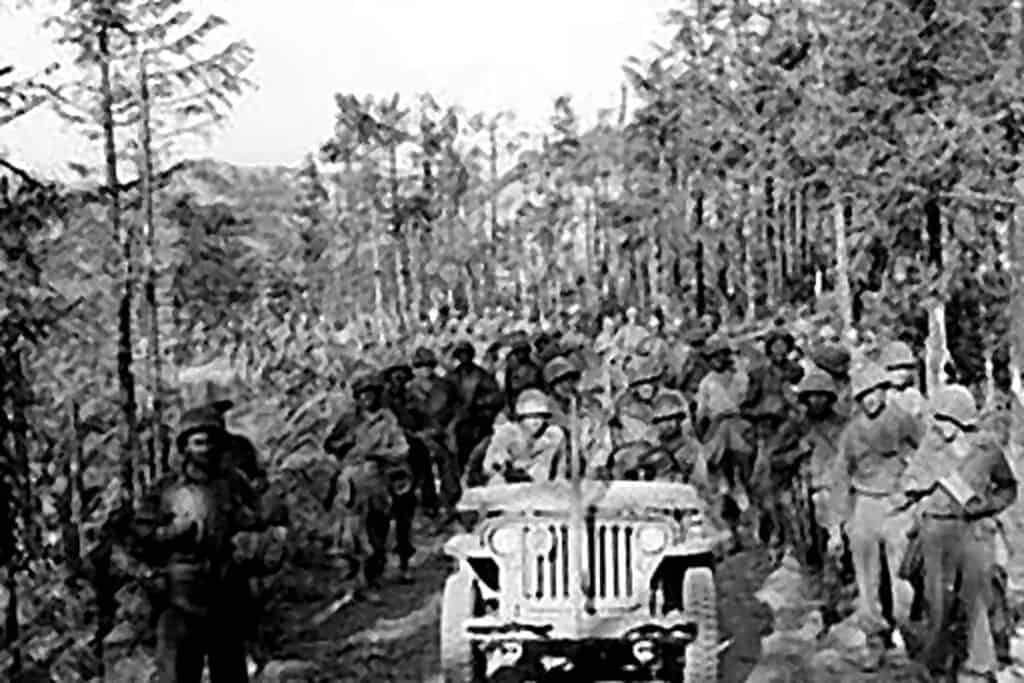
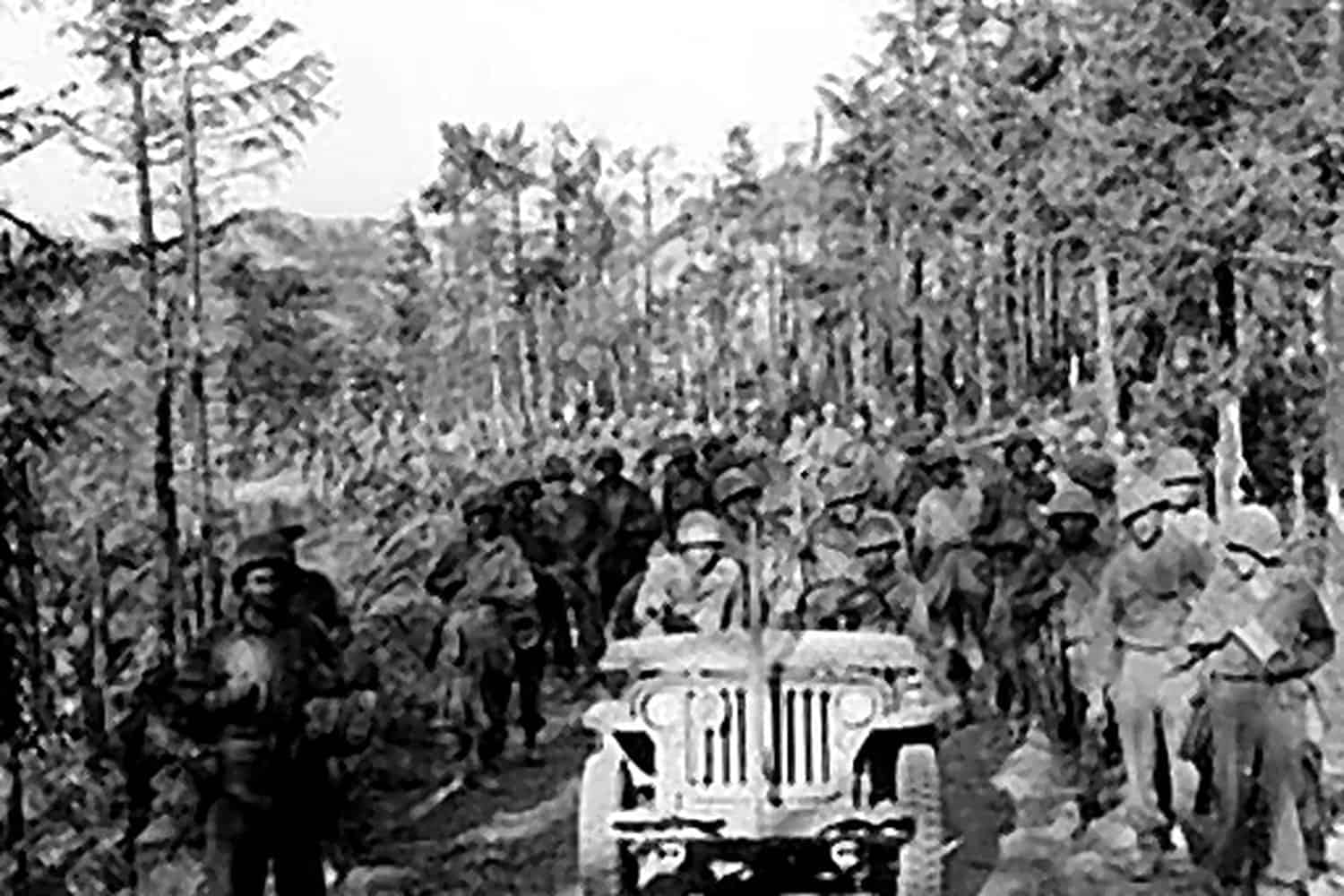
The 338th Infantry Regiment took part in this advance on the front line. McNelis served with Company E, 2nd Battalion. During the initial assault on the Gothic Line, the 1st Battalion bore the brunt of the fighting for Monte Altuzzo, while the 2nd Battalion operated within the same divisional formation in the adjacent sector.8 Monte Altuzzo therefore marks the geographical starting point of McNelis’s campaign in the Apennines, without allowing us to attribute to him personally any of the individual actions fought on the summit. On September 21, Firenzuola fell to the 85th Division. But just beyond the basin, German resistance stiffened again. The 338th and 339th Infantry Regiments had to advance north and northeast through the chain of heights leading toward Poggio, Peglio, and Monte Canda, against German forces falling back from one ridge to the next.9 It is here that, over the course of just three days, we find
Paul McNelis involved in two remarkable episodes.
Emile Bloch, McNelis, and the Medal of Honor
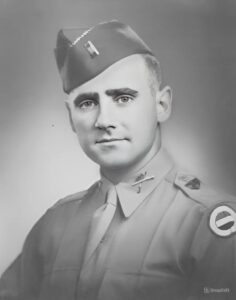
Emile Bloch, Medal of Honor on Piancaldoli
The first took place on September 22. In McNelis’s account, Company E was pinned down by German machine-gun fire coming from Hill 733, near Poggio, about two miles northeast of Firenzuola.10 His platoon leader, First Lieutenant Orville E. Bloch, decided to eliminate the positions that were preventing the company from advancing. According to the Medal of Honor citation, Bloch gathered three volunteers, reached a covered position near several buildings, and personally attacked a series of enemy positions, knocking out five machine-gun nests and capturing a total of nineteen German soldiers.11
For our story, what matters most is McNelis’s own recollection: Paul was there during the fighting. Company E had just taken a number of prisoners, and Bloch ordered McNelis and another soldier to escort them to the rear. When Paul returned to the line, he learned that the lieutenant had moved forward toward a small cluster of houses and went to join him. He arrived after Bloch had already attacked the first machine-gun position. The lieutenant took McNelis with him and ordered him to cover a corner of the road. McNelis spotted several German soldiers, opened fire, and thus took a direct part in the next phase of the engagement.12 We therefore cannot automatically identify McNelis as one of the three original volunteers mentioned in the Medal of Honor citation: his own account suggests that he reached Bloch only after the action was already underway. We can, however, state that Paul McNelis fought alongside Orville Bloch during the September 22 action for which his platoon leader was awarded the Medal of Honor.
Two days later, as the advance continued through the same chain of heights, it was McNelis himself who distinguished himself in combat.
Hill 754 and the Bronze Star
On September 24, 1944, just two days after Bloch’s action, Company E was still fighting on the heights northeast of Firenzuola. It is here that Hill 754 appears in the record. The account published by Richard A. Beranty places the action “in the vicinity of Carpenaccia, on Hill 754 due east of Peglio.”13 This proved to be one of the key turning points in the research. In the 2005 article, the episode is placed in the narrative after Monte delle Formiche and linked to a citation dated October 12. A review of the 85th Division’s General Orders, however, corrected the chronology: Paul R. McNelis, ASN 33572443, PFC, Company E, 338th Infantry Regiment, was awarded the Bronze Star Medal for Heroic Achievement for an action carried out on September 24, 1944. The award was formally announced in General Orders No. 66, dated October 26.14 We are therefore not at Monte delle Formiche, but still in the sector immediately northeast of Firenzuola.
The nature of the action was also different from the fighting with Bloch. On September 22, the immediate threat came from German machine guns blocking the advance; on September 24, McNelis instead located a mortar position. According to the citation, while reconnoitering ahead of his own lines, he approached the mortar emplacement as another soldier covered his advance, captured three German soldiers, destroyed the mortars, and brought the prisoners back to his company. He also provided valuable information about the enemy situation in front of the unit.15
McNelis’s own recollection gives the episode an even more immediate, tangible quality. His squad had just taken a ridgeline and had run out of water. Paul set out with John F. McAleavey, who was carrying a BAR, toward a farmhouse on the reverse slope in the hope of finding a well. Entering from the uphill side of the building, McNelis noticed German equipment; moments later, he heard gunfire. When he went back outside, he found McAleavey firing toward the windows. Several German soldiers who had remained in the lower part of the house eventually surrendered. McNelis later identified them as members of the mortar position located behind the forward line.16 The location of Hill 754 still had to be determined. The reference to Peglio proved particularly significant. An operational report of the 85th Cavalry Reconnaissance Troop records that on September 26, just two days after McNelis’s action, the unit was attached to the 338th Infantry Regiment with orders to relieve Company C on the slopes of Monte Peglio. The following day, it came under the control of the 1st Battalion, 338th Infantry, and received mortar and machine-gun fire from the Monte Canda sector.17 The direction of the advance is therefore consistent with the location described in the citation.
-
- Artillery in the mud
-
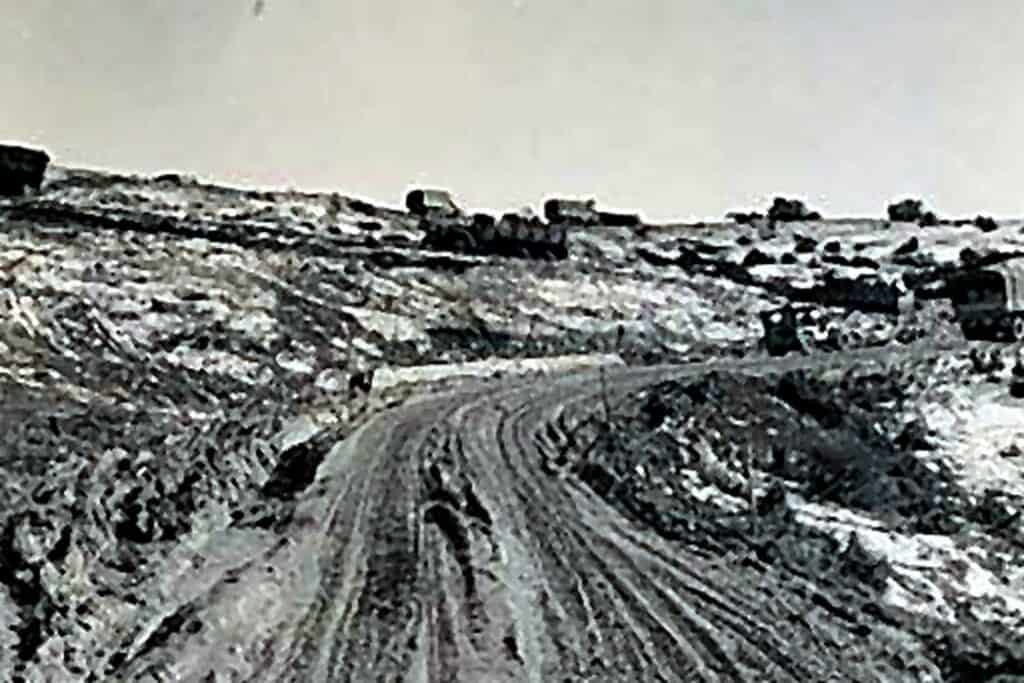
- On the road to Bologna
-
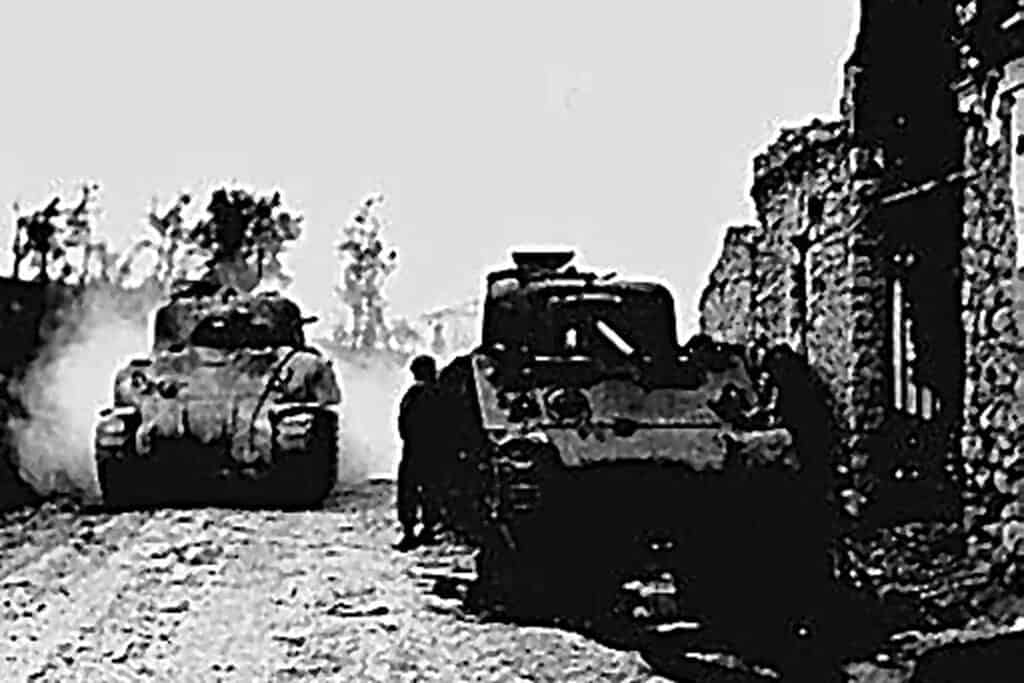
- Allied tanks near Firenzuola
The place name “Carpenaccia” also remains significant, although its identification has not yet been resolved. In the Firenzuola area there is a locality called Carpinaccio, connected to the road network around Peglio and Caburaccia; the similarity makes a transcription error plausible.18 The reference military map is the U.S. Army Map Service, Italy 1:25,000, Series 4228, Sheet 98-II NE Firenzuola.19 Subsequent comparison with modern topographic mapping made it possible to identify Hill 754 in the area immediately around Peglio, within the same network of ridges and roads where Company E had fought two days earlier during Bloch’s action, not far from the Poggio-Coloreta sector.20 What remains is to overlay this location precisely onto the 1944 military maps and, above all, to determine on the ground which rise, which farmhouse, and which reverse slope may correspond to the place remembered by McNelis.
The sequence is now much clearer: September 22, Hill 733, Bloch, and the machine-gun nests; September 24, Hill 754 near Peglio, McNelis, and the German mortars. Two engagements separated by only two days, both part of Easy Company’s northward advance. In the first, McNelis fought alongside the officer who would receive the Medal of Honor;
in the second, McNelis himself carried out the action for which he would be awarded the Bronze Star.
Toward Monte delle Formiche
After the fighting northeast of Firenzuola, the 338th continued its advance through the Apennines. German resistance remained stubborn, and the terrain grew increasingly difficult: few roads, exposed ridgelines, woods, ravines, and above all mud, which the October rains turned into a constant logistical problem. By following the operational reports and the divisional history, the research made it possible to reconstruct the regiment’s general line of advance toward the Sillaro and Idice valleys. One document, however, proved especially important: a postwar monograph produced by the Infantry School at Fort Benning, based on Orville E. Bloch’s firsthand experience and devoted specifically to the operations of the 2nd Battalion, 338th Infantry, in the capture of Monte delle Formiche from October 10 to 13, 1944.21 For McNelis’s story, it is an invaluable source. It does not deal with the 85th Division in general terms; it focuses on the battalion to which he belonged and follows the actions of Company E—Easy Company—in detail.
-
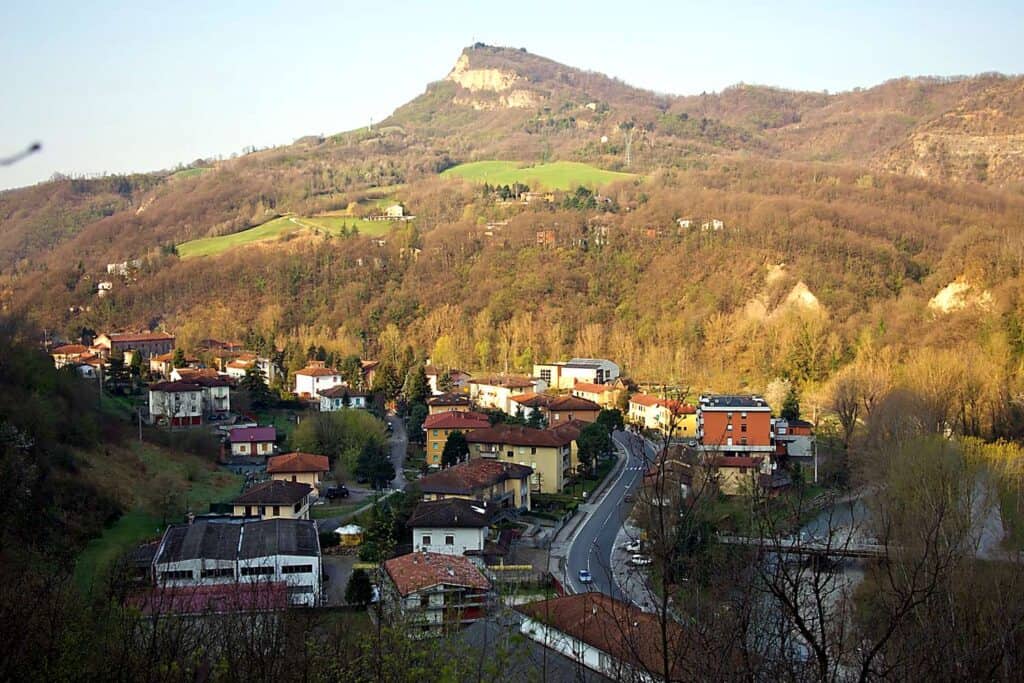
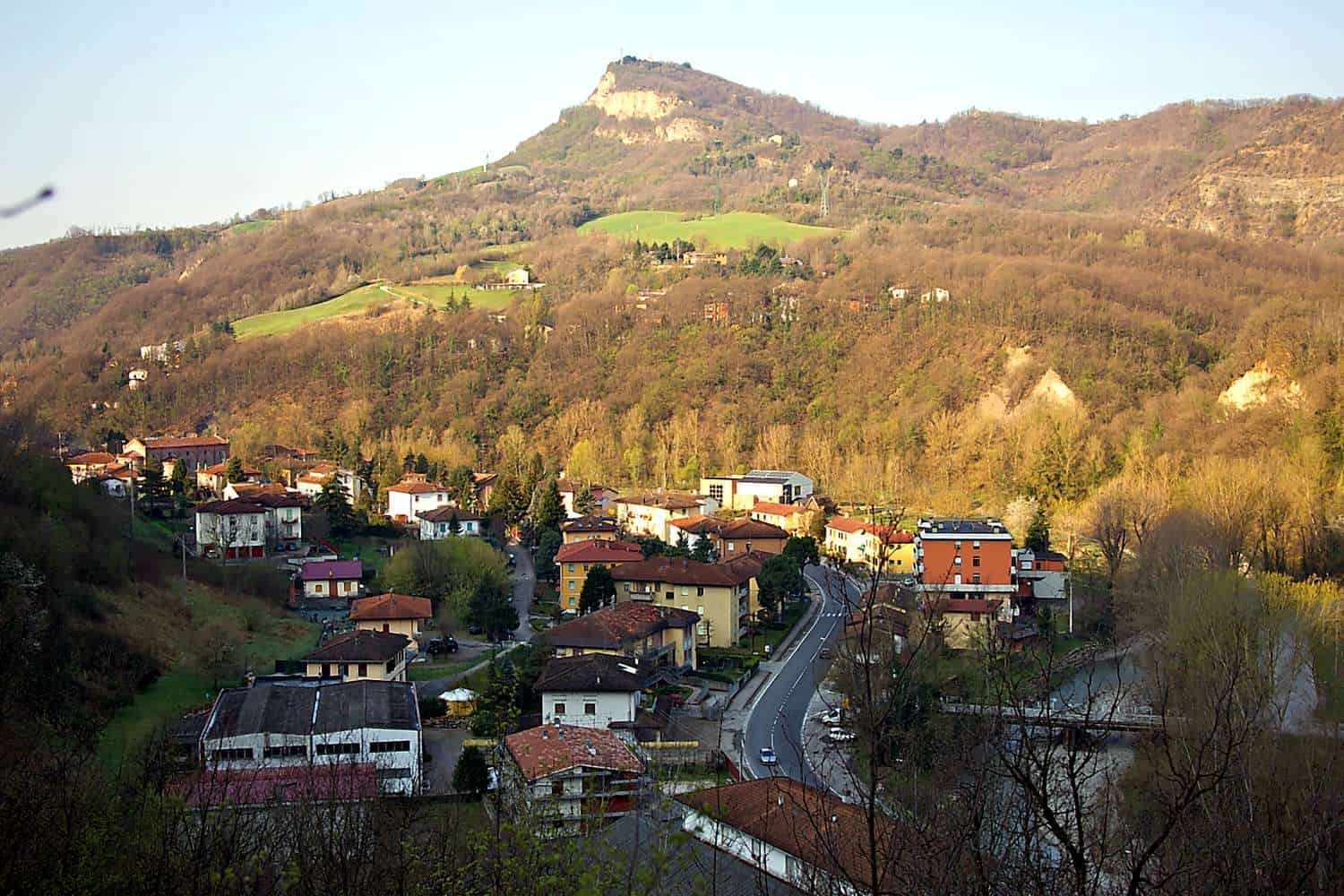
- Monterenzio and Monte delle Formiche (Mont of Ants)
-
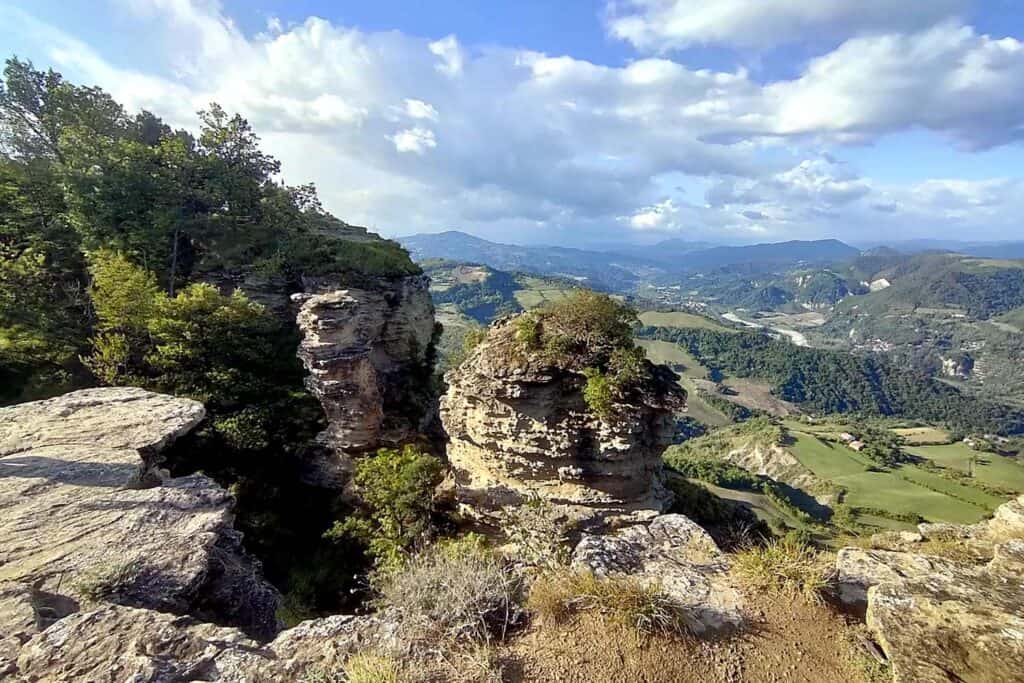
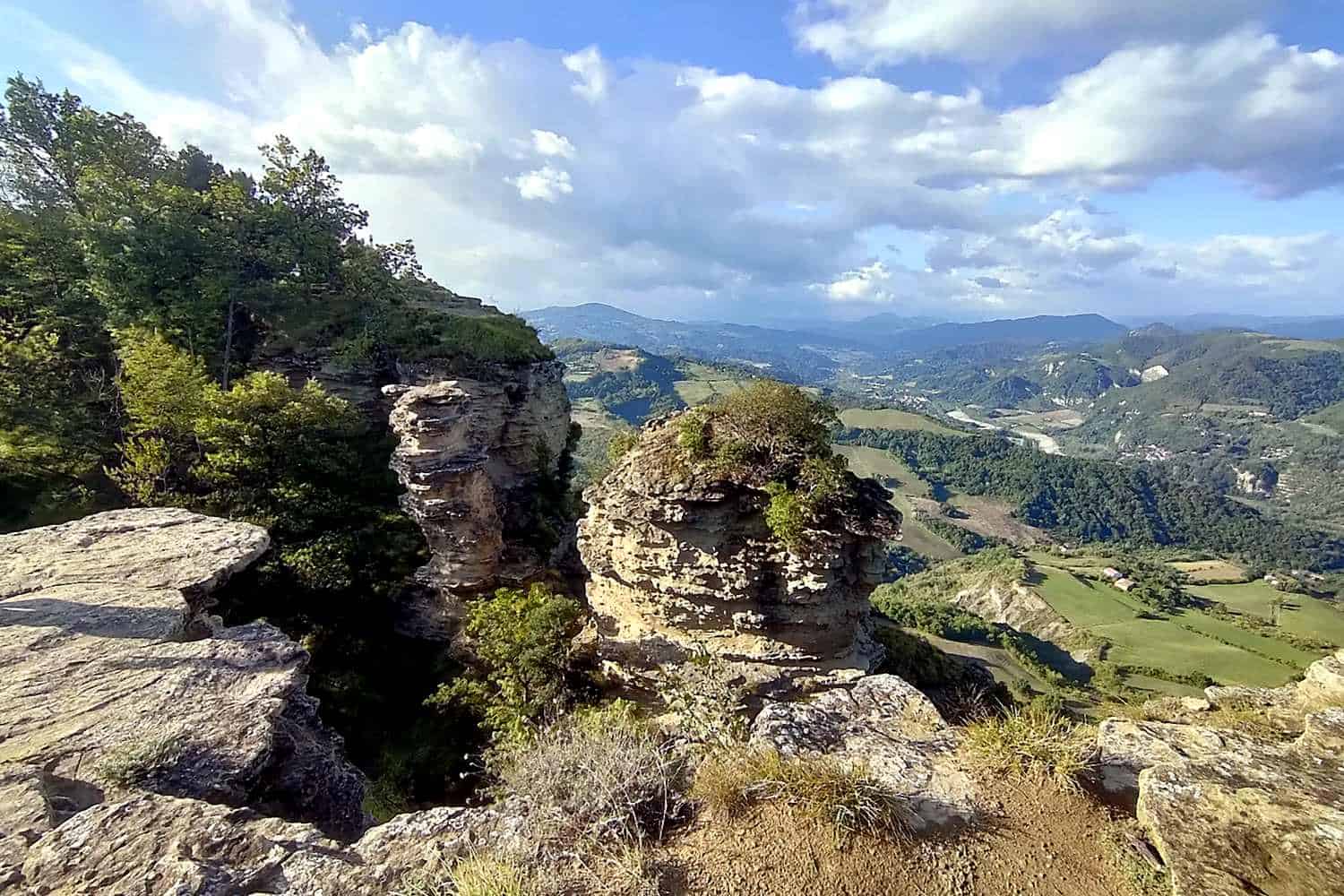
- On the rocks on the Sillaro river
-
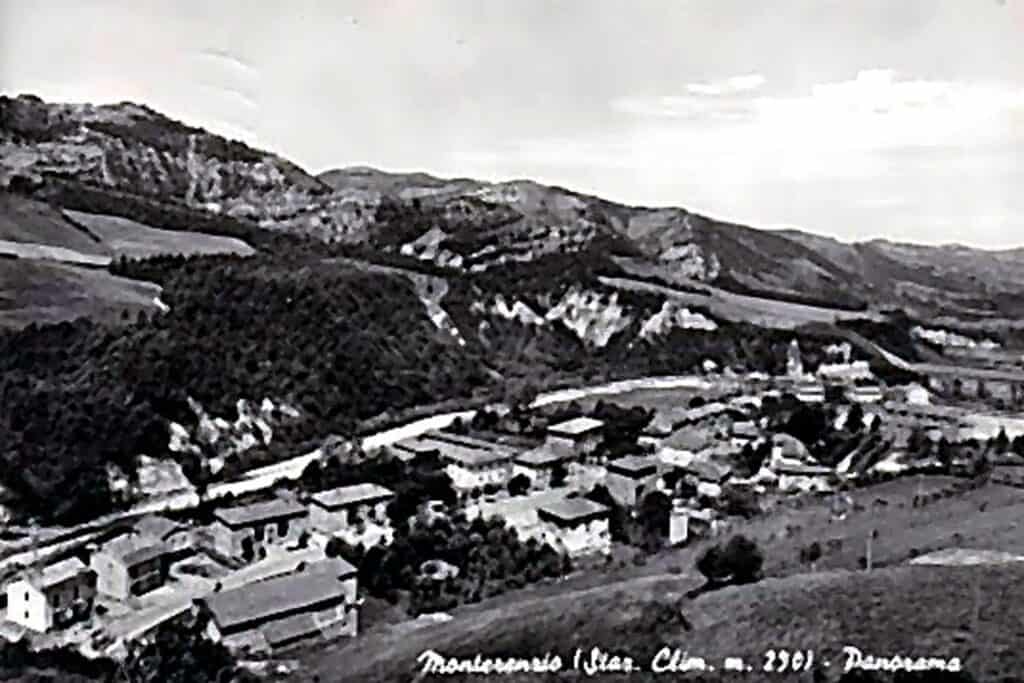
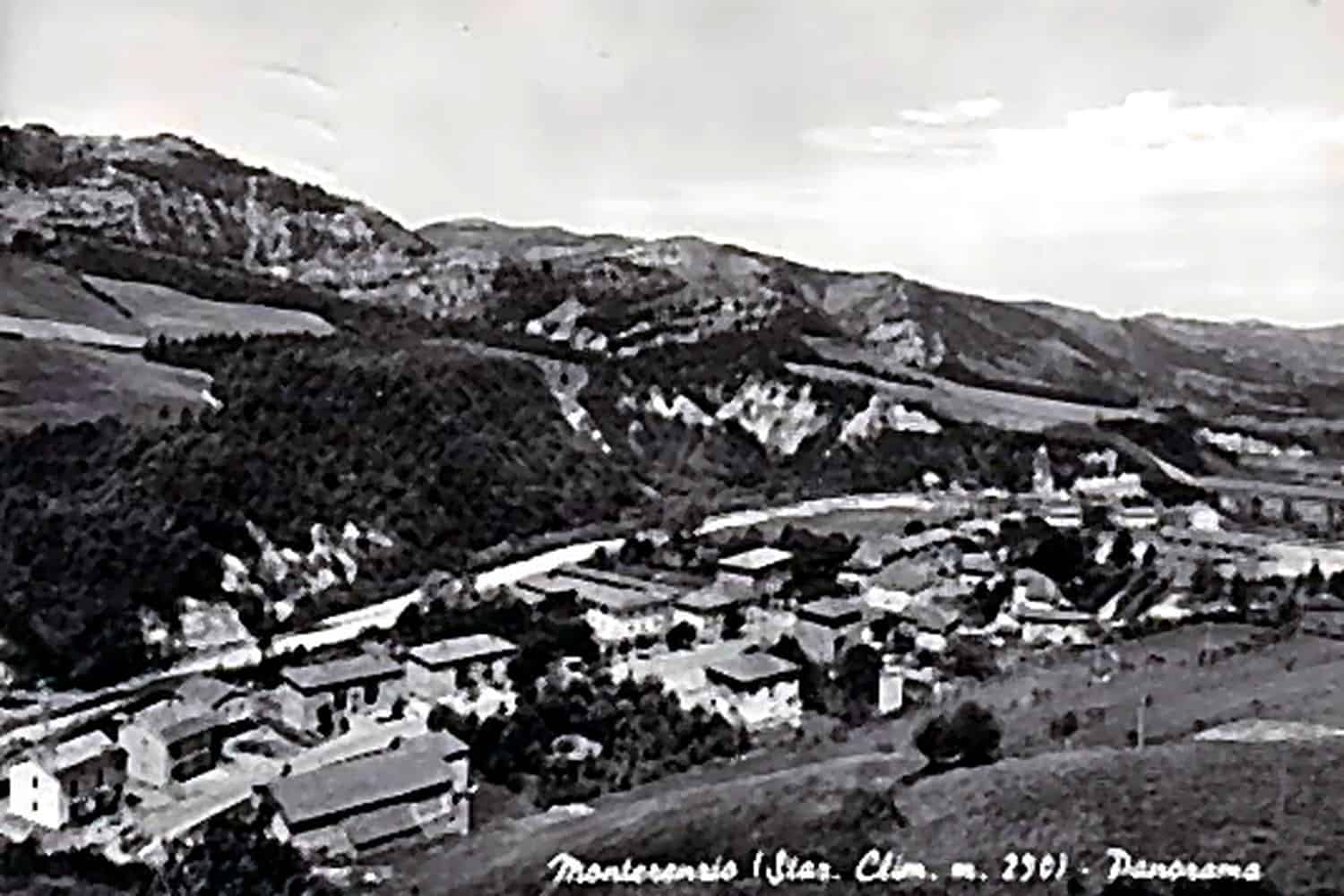
- Old Monterenzio postcard
Monte delle Formiche was a naturally formidable position. The steep slopes surrounding the massif left only a few possible approaches, while from the summit the Germans could observe both the Idice Valley and the routes leading toward the Florence-Bologna road. The 2nd Battalion was assigned the task of taking the mountain, while the 1st Battalion advanced on its right through the valley sector.22 On the morning of October 10, two platoons of Company E reached La Casona. The plan called for the 1st Platoon to lead the attack against the small cluster of houses at Maceratoia, while the other two platoons were to pass through and push on toward Ca’ del Monte.23 The men advanced before dawn, using a narrow drainage ditch as virtually the only cover available across the open ground. The account describes the infantrymen crawling through the muddy bottom for nearly a thousand yards before reaching Maceratoia. By 8:30 a.m., the 1st Platoon was ready to assault the position; it captured the buildings and took nineteen German prisoners.24 The attempt to push on immediately toward Ca’ del Monte, however, met much stronger resistance. A small patrol from Company E managed to reach the buildings and surprise several defenders, but was then caught by German fire from several directions and forced to withdraw. Throughout the day, Maceratoia came under mortar and machine-gun fire from the higher positions; during the night, Easy Company also had to withstand a violent counterattack.25 For our research, this monograph resolved another important point in McNelis’s story: Paul was not simply “somewhere near Monte delle Formiche.” His company was one of the lead units in the attack, allowing us to reconstruct its objectives, directions of advance, and the conditions of the terrain with considerable precision. We cannot know McNelis’s exact position during every phase of the battle, but we do know where Company E was operating.
The 339th Infantry Regiment was advancing through the same sector at the same time. Serving with Company D was Martin Adler, the American soldier who would become widely known many years later for the photograph taken with three Italian children he encountered in a house in the Monterenzio area.26 The two stories belong to the same advance by the 85th Division: Adler with the 339th, McNelis with the 338th, moving along nearby routes through the Bolognese Apennines.
Monte delle Formiche, then, was indeed one of the places where Paul McNelis fought. But it was not where he would be wounded.
To locate that place, it was necessary to continue following the 338th farther north, toward Monte Fano, Pizzano, and Orbega.
From Monte Fano to Pizzano and Orbega
After Monte delle Formiche, the 338th continued pushing north. On October 20, it captured Monte Fano, and two days later it was ordered to move from that position toward the German strongpoints at Pizzano and Orbega to the northwest.27 This was the key step that resolved one of the main uncertainties in the research. In the family’s initial information, McNelis’s wounding was still associated with Monte delle Formiche. By October 25, however, his regiment had already moved several miles farther north. Monte Mezzano, which had also been considered during the reconstruction, can likewise be ruled out: the fighting there on October 24–25 involved the 337th Infantry, while the 338th was operating along the Monte Fano–Pizzano–Orbega axis.28
-
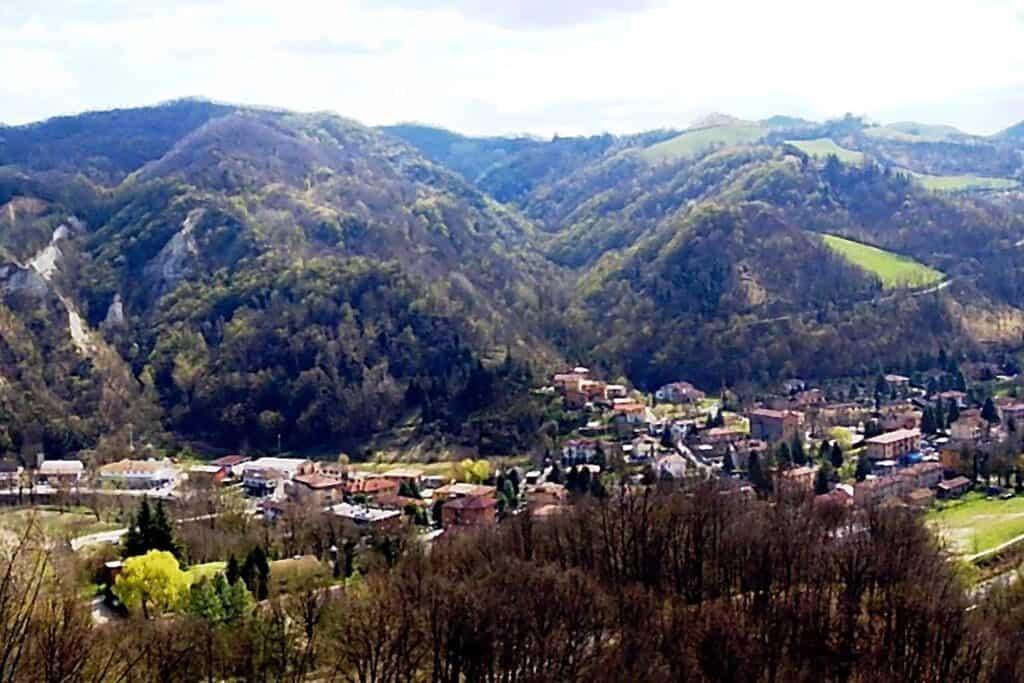
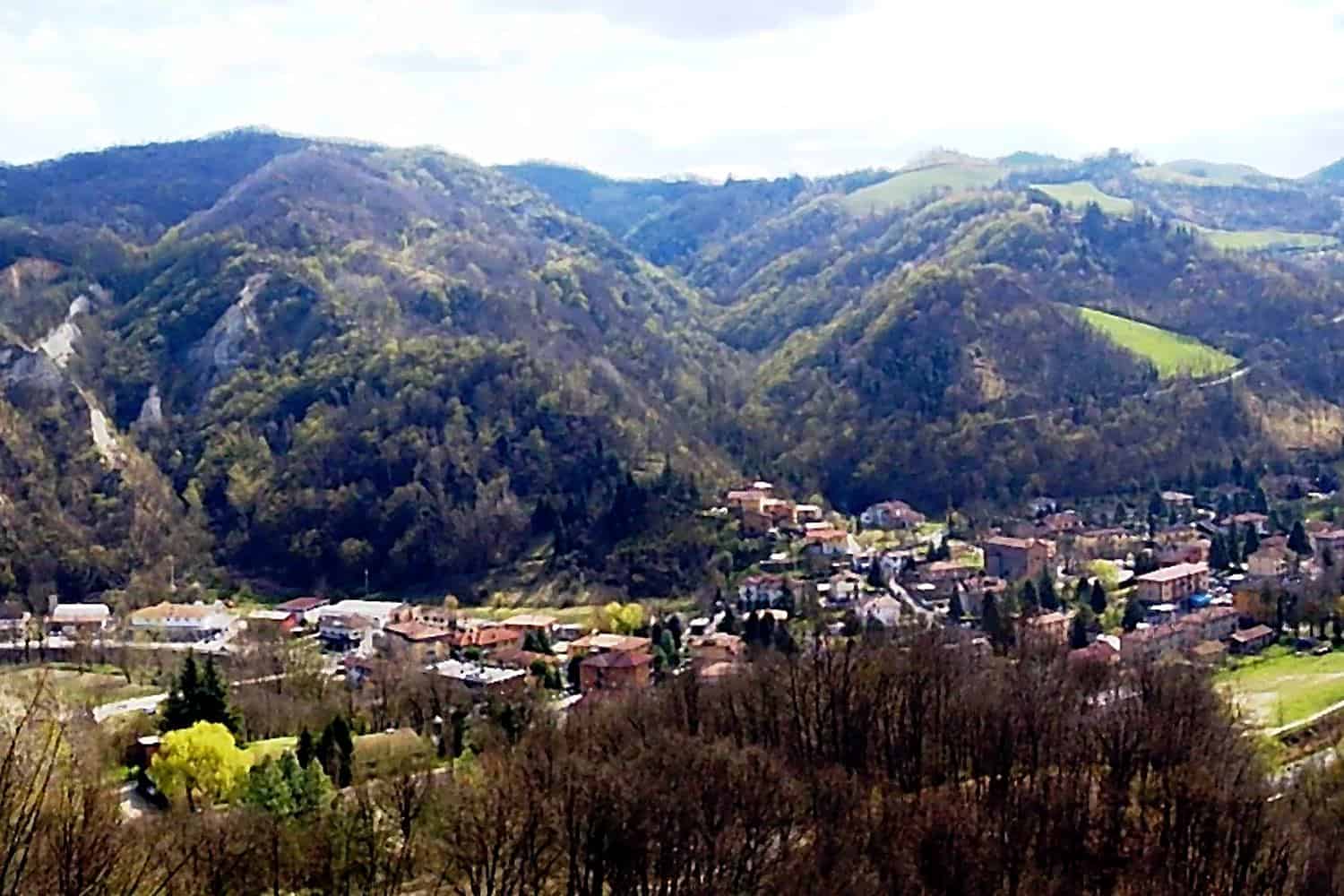
- Rough terrain and cliffs overlooking the Sillaro
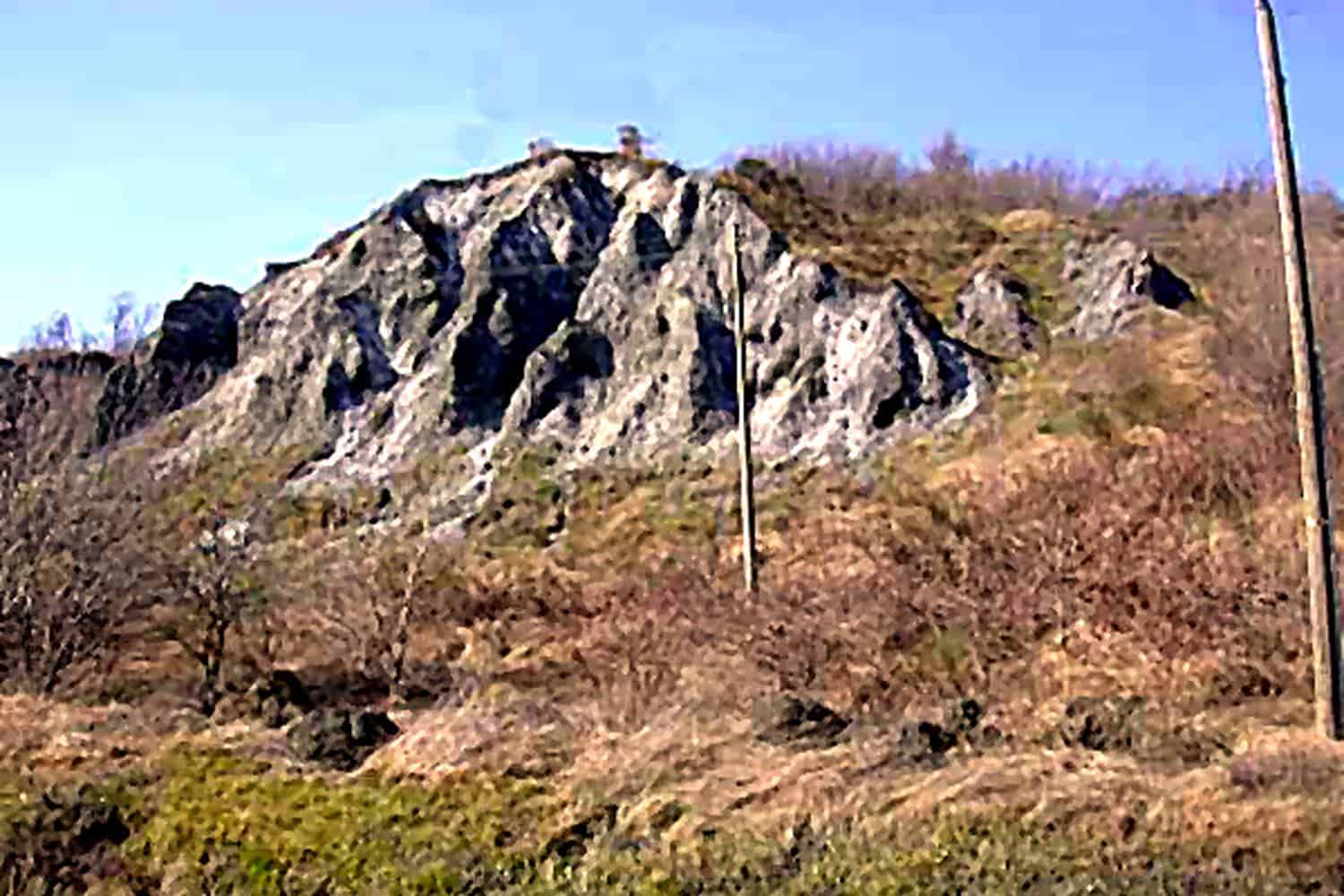
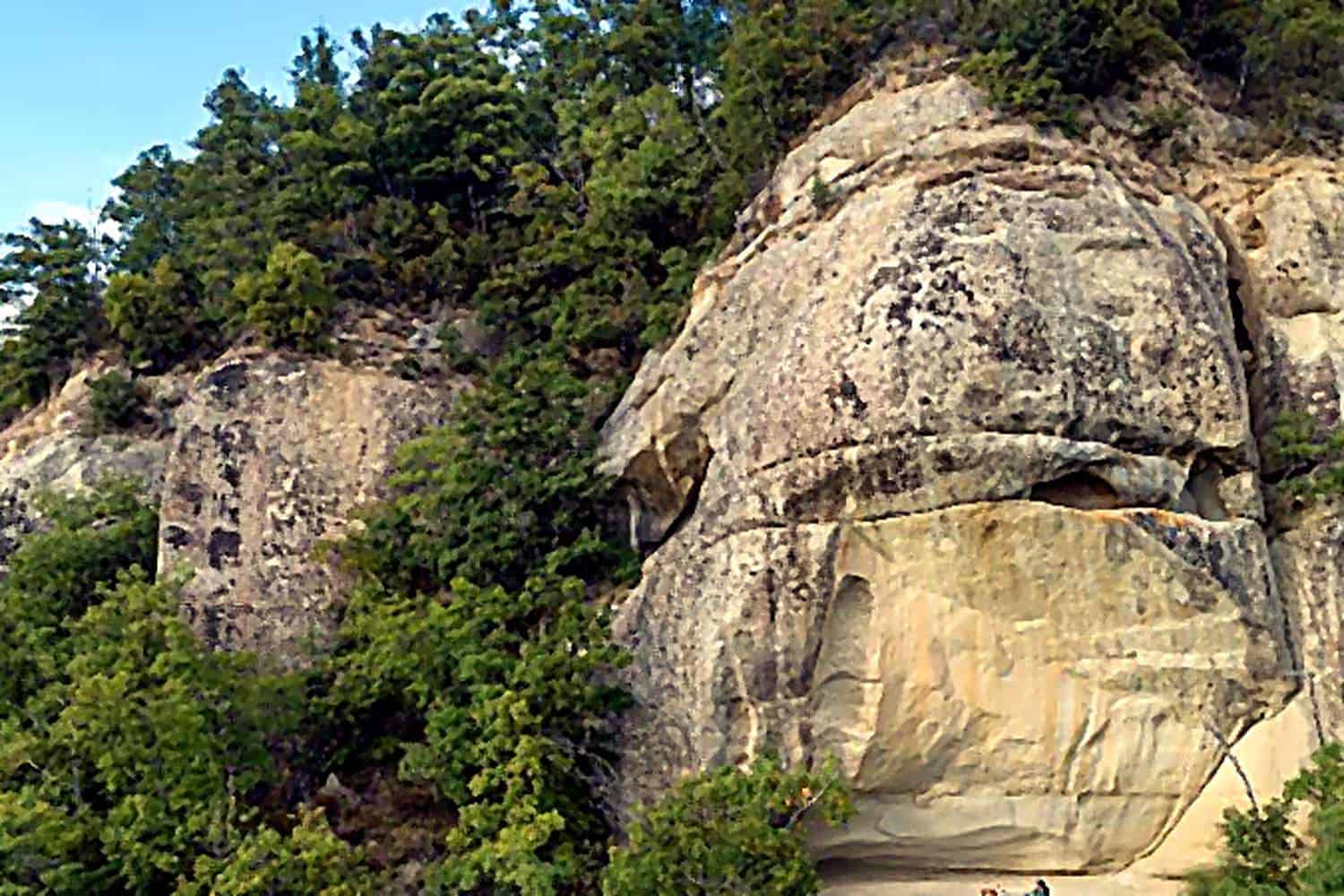
At this point, McNelis’s own testimony became decisive. He remembered that, for once, the patrol was moving downhill; the company command post was set up in a rural building, a small settlement lay in front of the lines, and a rocky cliff nearby served as one of the landmarks of the front. He would also later recall a large haystack near the German positions.29 These may seem like minor details, but when compared with the maps and the terrain itself, they narrow the search area considerably. Orbega and Pizzano, on the eastern slopes of the Idice Valley, fit well with a movement from the ridgeline down toward lower ground. The local terrain is also significant: even today, the Municipality of Monterenzio describes the Pizzano–Cà di Bazzone sector as a stretch where the Idice River runs between steep sandstone cliffs.30 This does not mean that Cà di Bazzone was the site where McNelis was wounded. On the contrary, at the current stage of the research, the most plausible location remains on the slopes of the Pizzano–Orbega area, while Cà di Bazzone is of greater interest for the subsequent evacuation toward the valley floor. For this part of the research as well, the correct military map has been identified: U.S. Army Map Service, Italy 1:25,000, Series 4228, Sheet 98-I NE Monterenzio, 2nd Edition, 1944.31 This map sheet shows the Idice sector, its settlements, roads, and mule tracks used during the fighting. By this point, the search area had become much more clearly defined. What remained was to reconstruct what happened during the night of October 24–25, 1944, when McNelis once again moved out in front of his own lines.
The Night of October 24–25
At this point, McNelis’s account becomes exceptionally detailed. During the night of October 24–25, 1944, Company E had established its command post in a rural building that Paul remembered as a barn, while the men dug individual foxholes around it to provide security. Ahead of them, the ground finally sloped downward: “for once we were going downhill,” he would recall many years later. At around 11:00 p.m., McNelis was assigned to lead a patrol tasked with determining whether the Germans had abandoned the positions to their front. As the patrol moved forward, they were joined by the platoon sergeant, whom Paul remembered simply as Jackson. He asked where the American lines ended. McNelis pointed out a rocky cliff visible higher up and warned him not to go beyond it. Shortly afterward, a shot rang out. When the men returned to the command post, they learned that Jackson had moved beyond the line McNelis had indicated and had been hit, according to McNelis’s account, by American fire.32
The research has made it possible to identify that “Jackson” with near certainty. The 85th Division’s General Orders list Technical Sergeant Charles E. Jackson, ASN 32294303, Company E, 338th Infantry Regiment, as killed in action in October 1944. The same document also records a posthumous Silver Star awarded to him for an action on September 22.33 The match in surname, rank, company, and timeframe makes the identification highly convincing; however, the Company E Morning Report that would documentarily link his death to the specific episode described by McNelis has not yet been located.
-
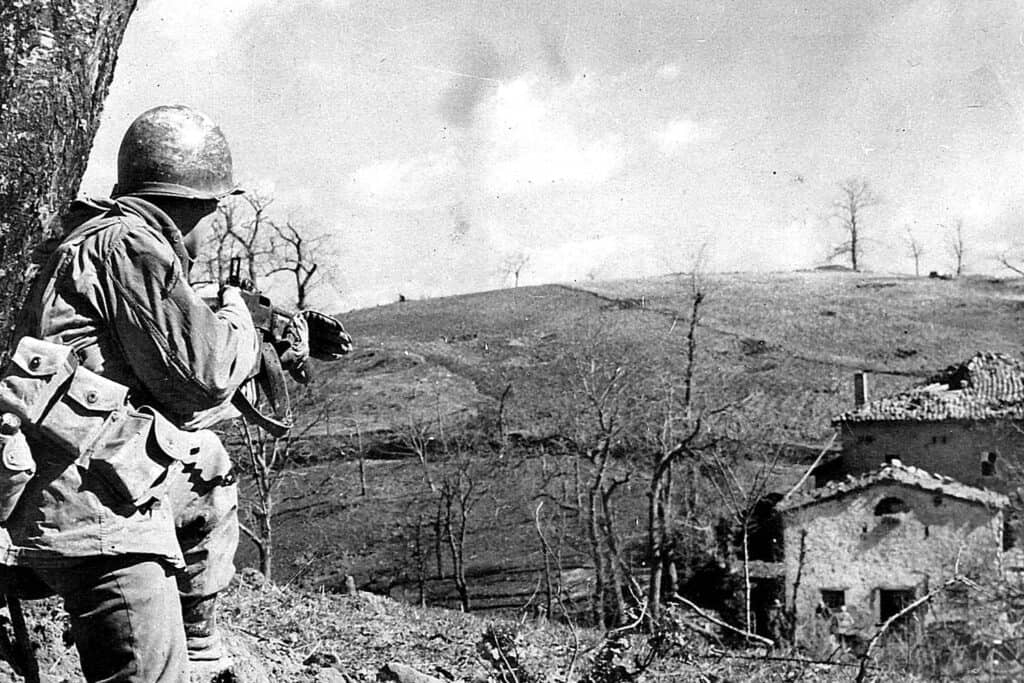
- A PFC looking toward Bologna over the Appennines
-
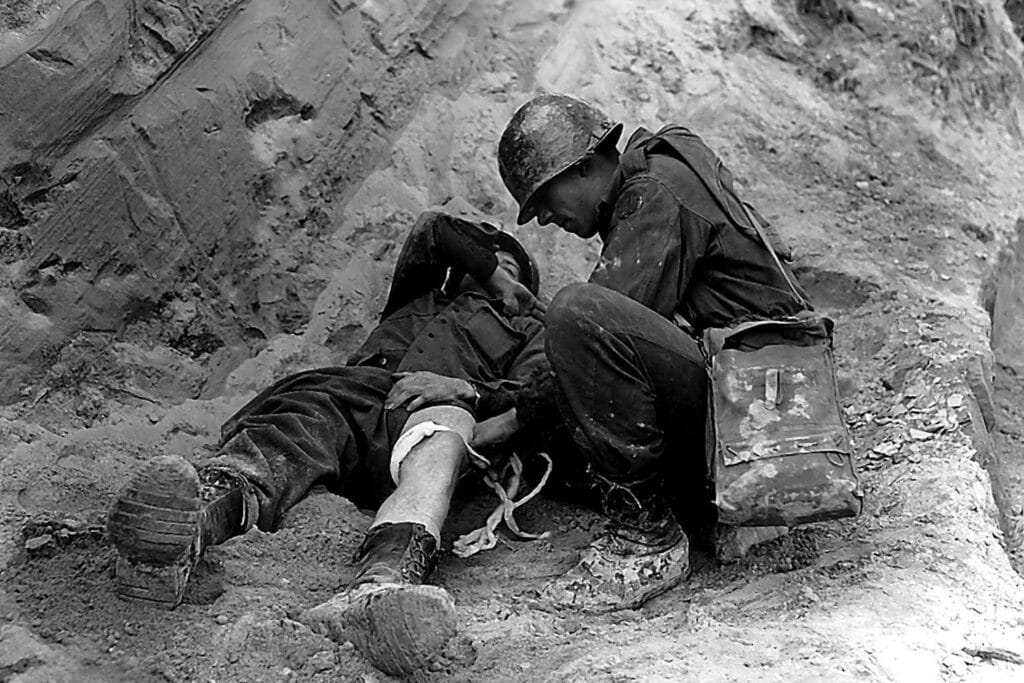
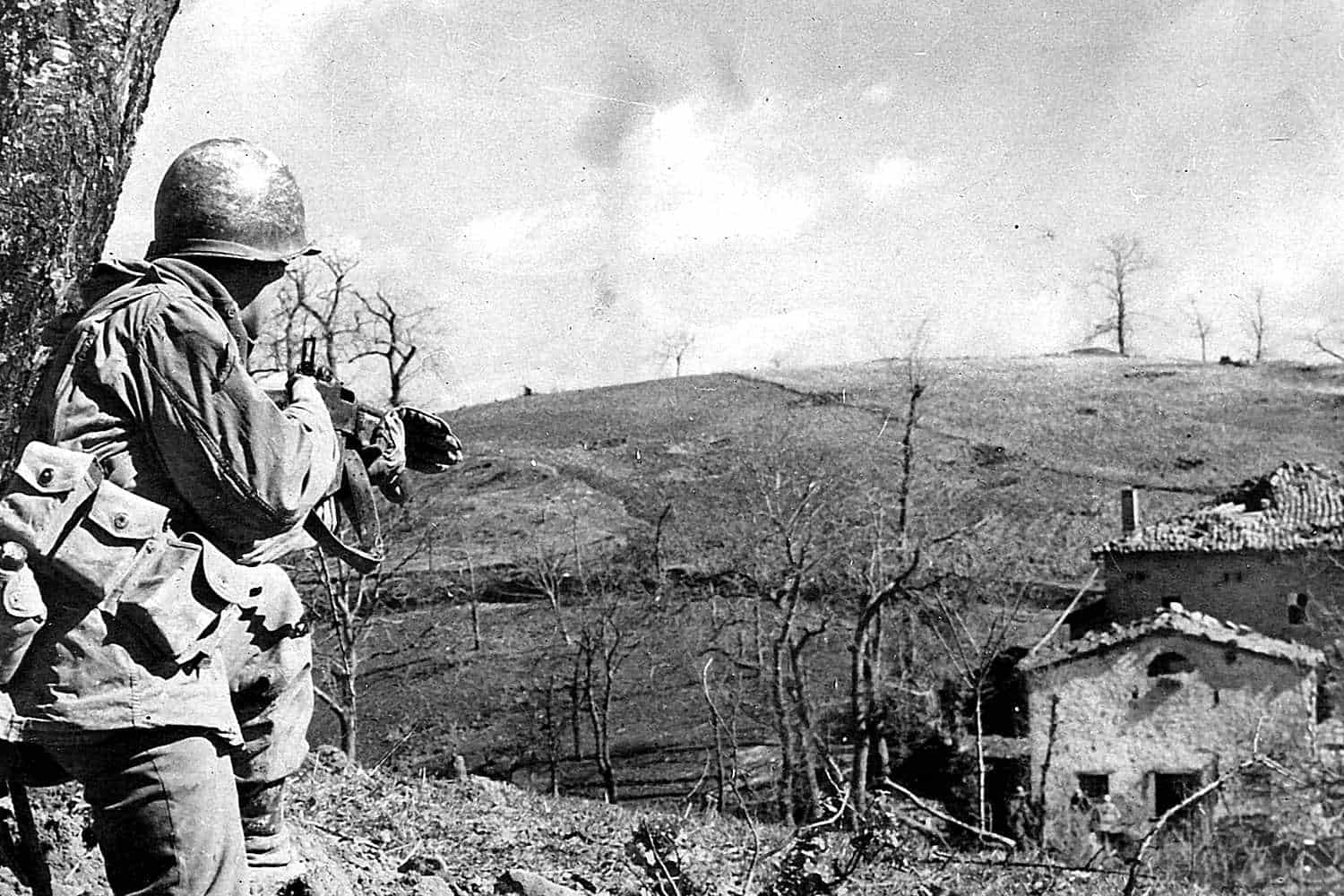
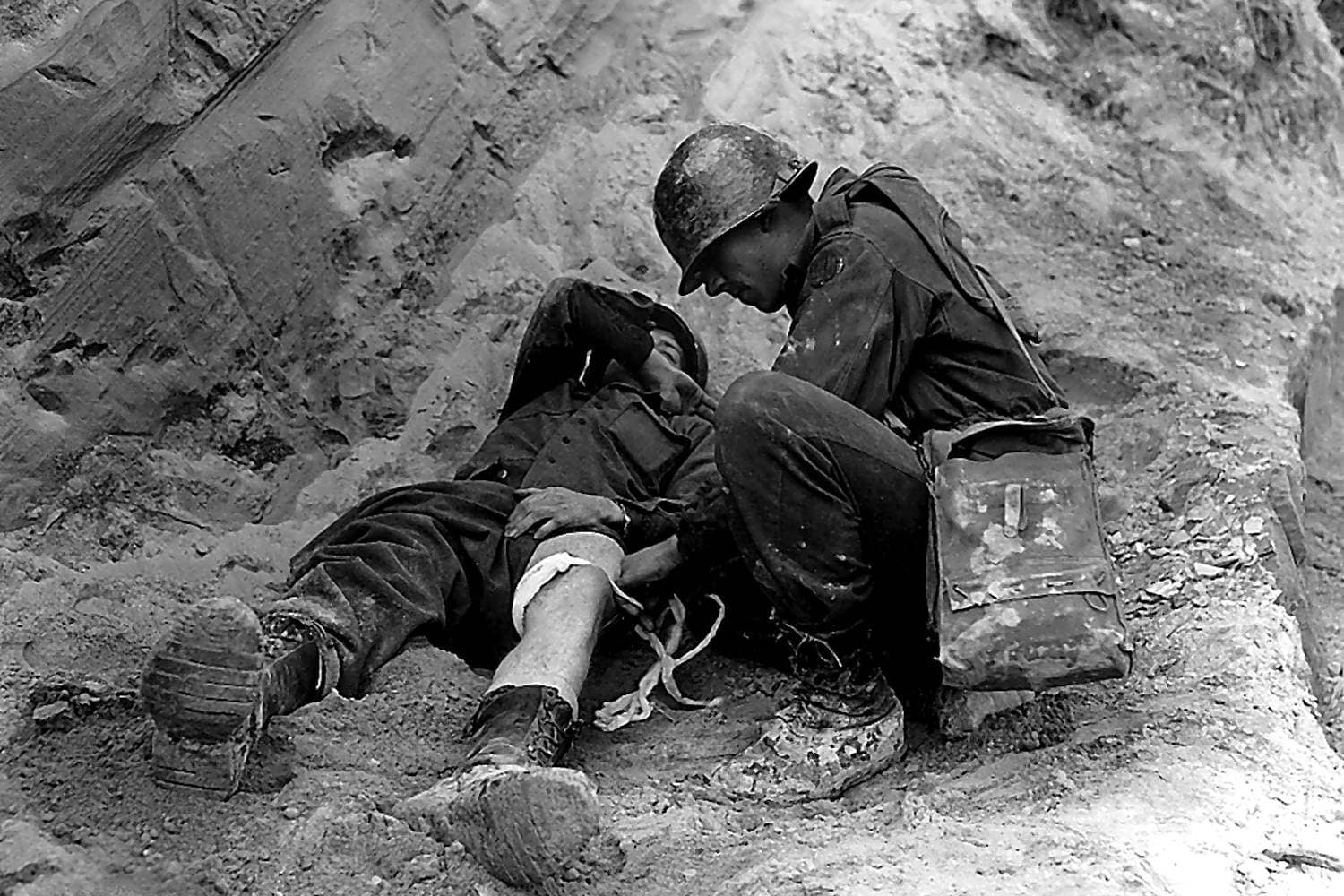
- An injured infantry soldier is being rescued
The explosion occurred behind him. McNelis took cover on the uphill side of the haystack and only then realized that he had been hit in the leg.
Two American soldiers reached him and, supporting him, managed to bring him back to the command post, where the company medic gave him first aid.35 Four days later, writing to his parents from the hospital, Paul recorded the time and circumstances himself: he had been wounded “about 4 o’clock in the morning of the 25th” by grenade fragments in his right leg.36 McNelis, however, lost track of David Milton that night. For a long time, he believed that Milton had been killed in the fighting; he later said that he learned Milton had been captured and subsequently died of his wounds.37 Here too, the research produced an important confirmation: the official list of Colorado servicemen who died during World War II includes PFC David H. Milton, ASN 37701919, classified as DOW — Died of Wounds.38 This identification is highly plausible for the David Milton remembered by McNelis, but it is not yet definitive: Company records still need to confirm that he served with Company E and, above all, the circumstances of his capture.
That night also provides the most valuable clues for locating the engagement: a downhill movement, the company command post in a farmhouse, a rocky cliff marking the limit of the American lines, a small settlement farther ahead, and a large haystack beside the German positions. These are details preserved in one man’s memory, not military coordinates. Yet when compared with the movements of the 338th and the terrain of the Pizzano–Orbega sector, they are precisely the elements that have allowed us to narrow down, step by step, the area where Paul McNelis was wounded.
Dalla montagna ad Ardenza
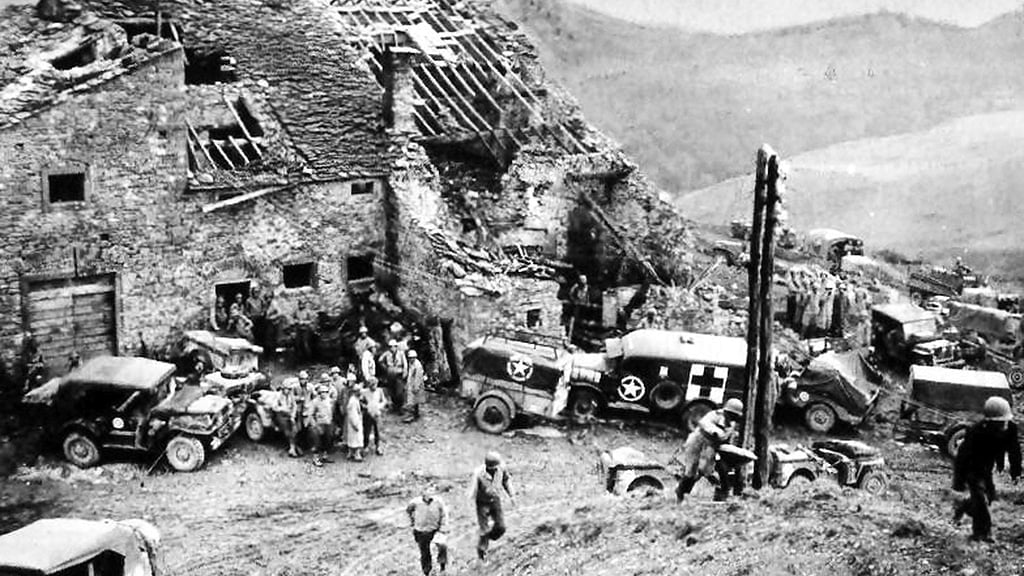
For McNelis, the fighting ended that night, but another phase of his wartime experience had begun: evacuation from the mountains. This is one of the most revealing passages in his account because it shows in concrete terms how wounded soldiers were evacuated on an Apennine front where roads often ended well short of the infantry positions. After he was carried back to Company E’s command post, the company medic treated his wound. The command then contacted battalion headquarters, and litter bearers came forward from the Battalion Aid Station, which McNelis remembered as being one or two miles away, to carry him to the rear.39 The following morning, Paul was placed on a litter secured crosswise to a jeep. The vehicle could advance only as far as the ridge remained passable. From there began a phase that may seem surprising today but was entirely normal on the Italian front: McNelis was transferred to a mule, which carried him down the mountain to the valley floor, where an ambulance was waiting.40
McNelis’s recollection is entirely consistent with the conditions under which the 85th Division operated. In the higher reaches of the Apennines, mule trails were often the only routes connecting the forward companies with the rear, and mules were used not only to carry ammunition, water, and rations to the front, but also to bring wounded soldiers back down.41 McNelis himself recalled that in the mountains even rations and water were brought up at night by mule. This detail also proved useful in our topographical research. If the wounding occurred, as the movements of the 338th and the other evidence suggest, on the slopes of the Pizzano–Orbega area, his account of being carried down by mule toward a river bottom fits closely with the Idice Valley below. It does not yet prove the exact spot where McNelis was wounded, but it strengthens the geographical reconstruction developed from the other so
From the valley floor, an ambulance carried him to the rear. McNelis recalled first being taken to a medical facility in the Florence area and later to a hospital near Livorno, where he underwent surgery.42 Fifth Army medical records make it possible to reconstruct the evacuation system through which he passed. From October 4, 1944, the 16th Evacuation Hospital was operating at Firenzuola and had become the army’s most forward evacuation hospital in the sector, receiving casualties from both flanks of II Corps.43 It therefore represents a plausible logistical stage in McNelis’s evacuation route, but at present we have no document proving that he actually passed through it.
-
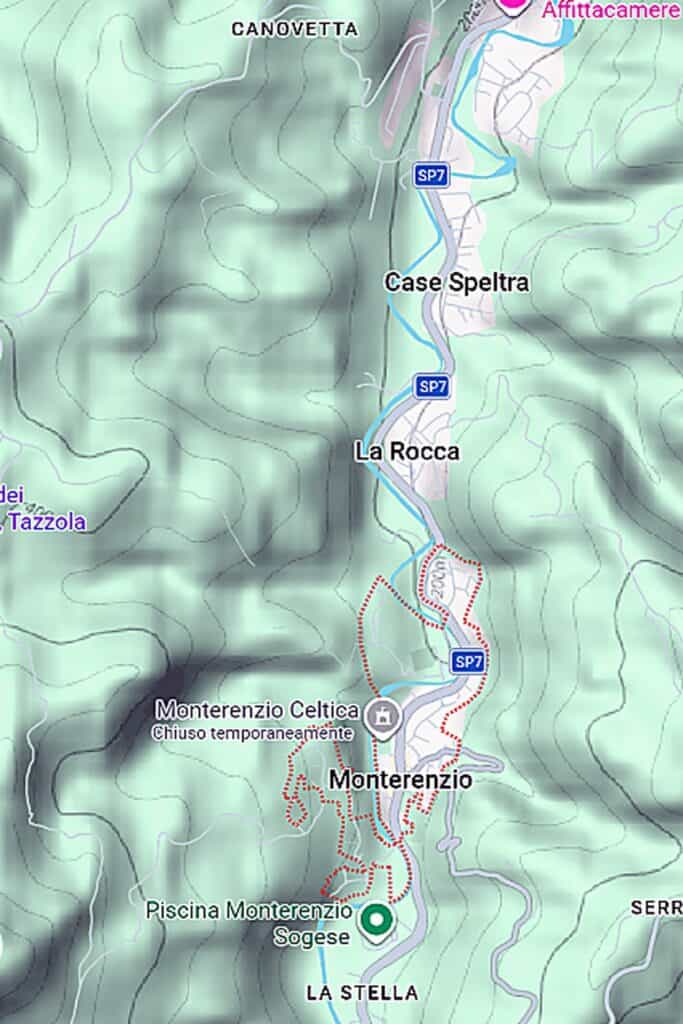
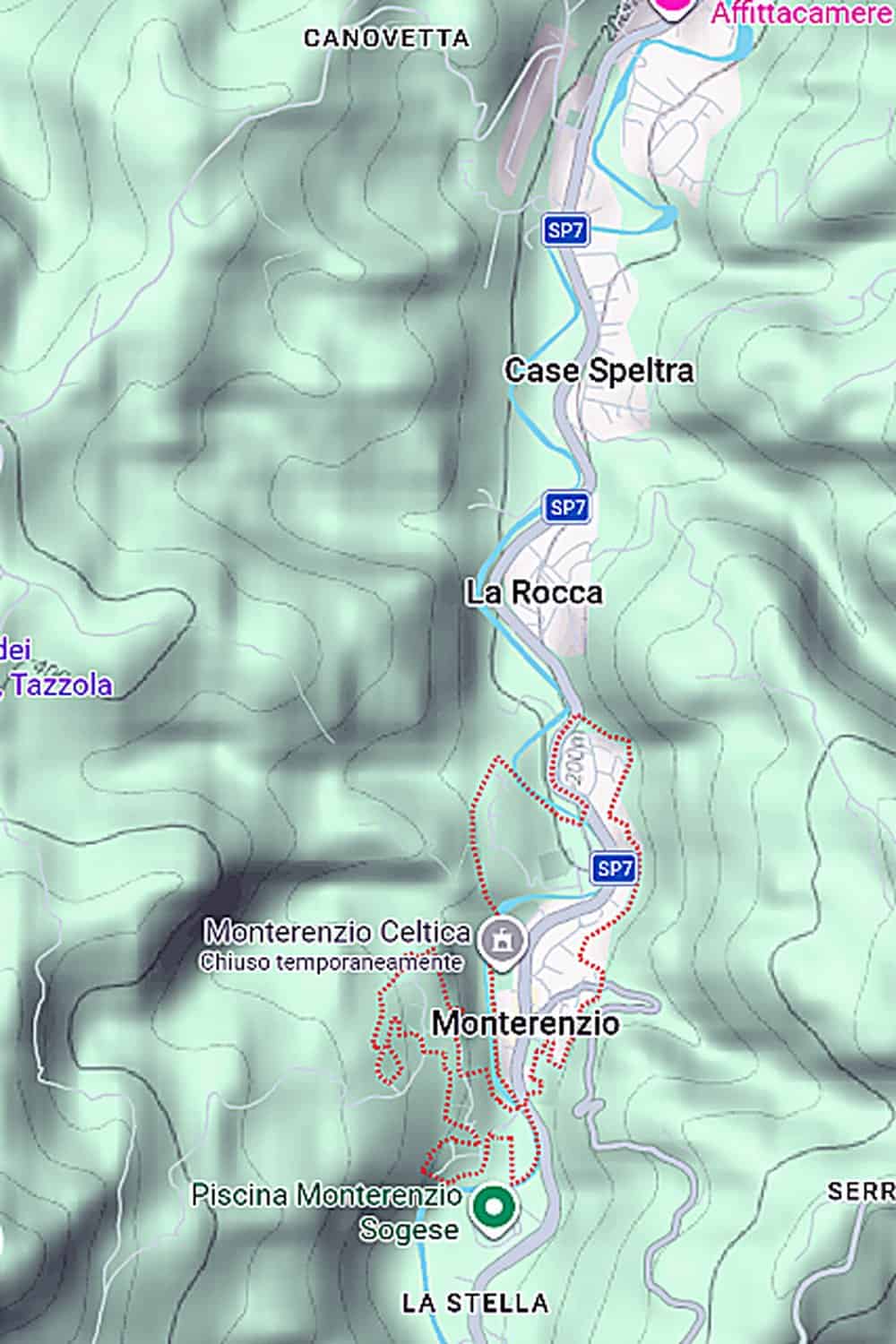
- The map where McNeil was injured
-
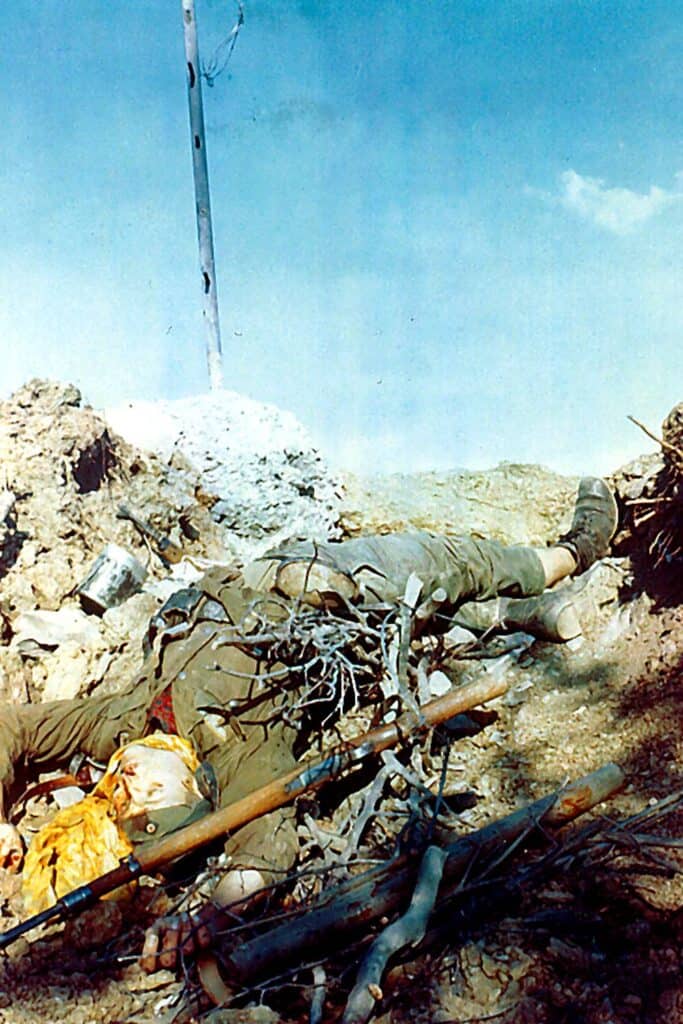
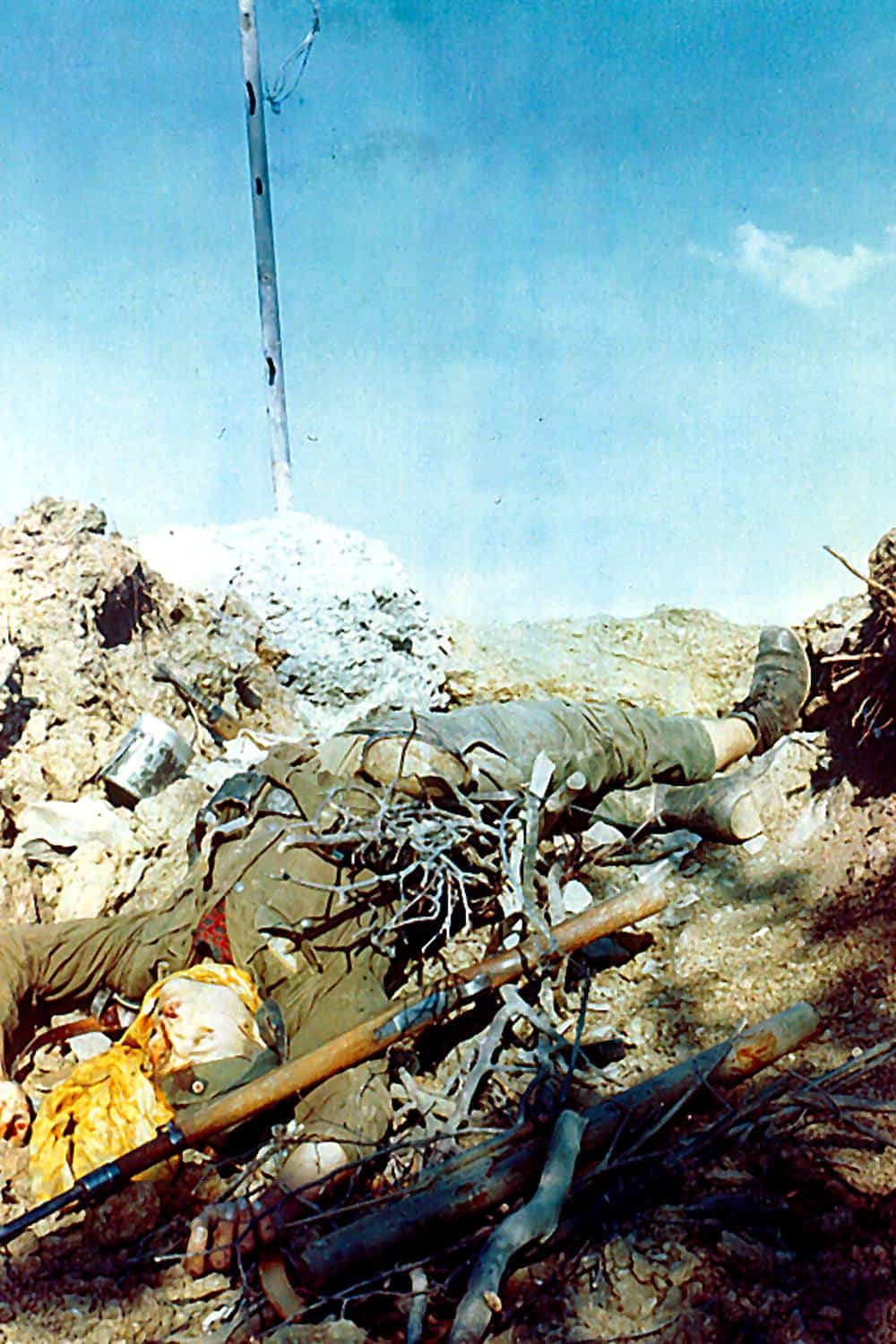
- A dead German soldier
-
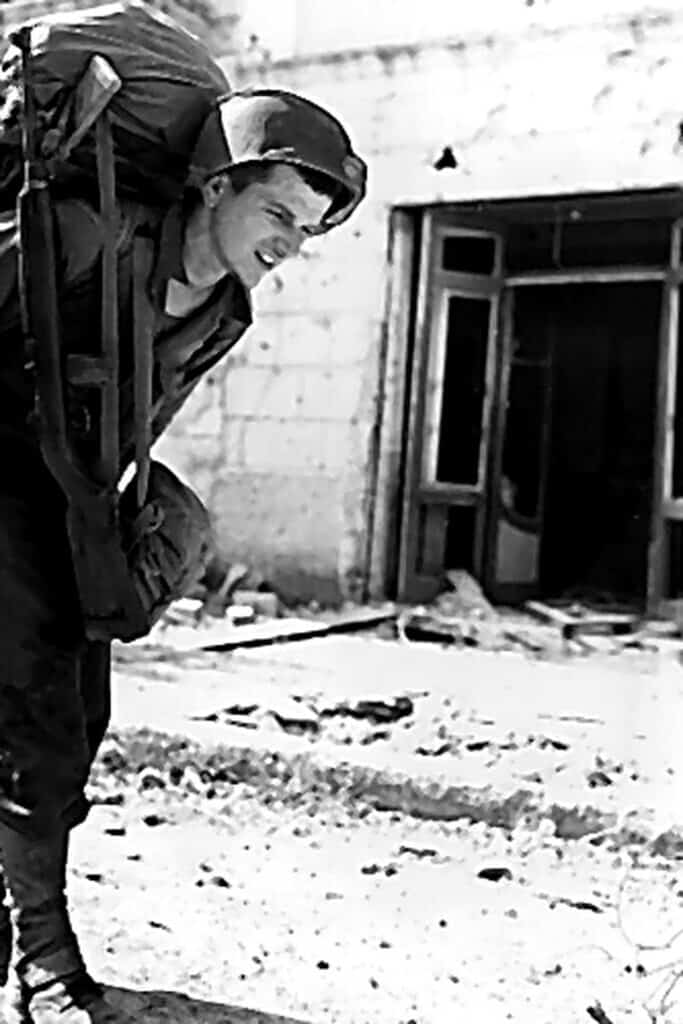
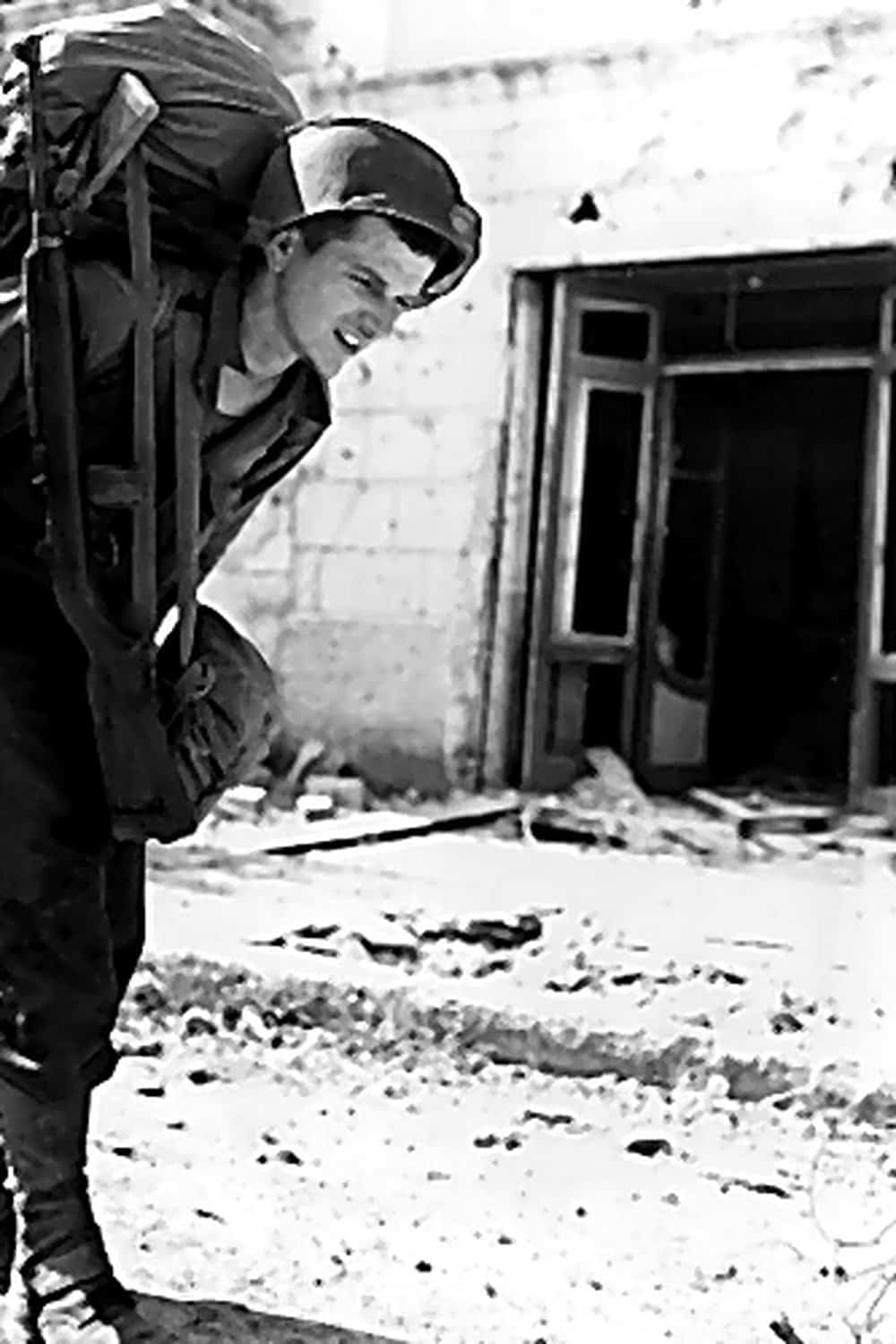
- An American soldier on the Appenines
For the final stage of the story, we have much greater certainty. On October 29, just four days after he was wounded, Paul wrote to his parents informing them that he was at the 64th General Hospital.44
The official history of the U.S. Army Medical Department allows us to locate it precisely: in late July 1944, the 64th General Hospital had been transferred from Caserta to Livorno, where it opened in a former Fascist parachute training school in the suburb of Ardenza. At the beginning of the Northern Apennines campaign, the hospital, together with the 55th Station Hospital, provided a total of 1,750 beds.45 The research therefore allows us to establish at least the final point in the evacuation chain: on October 29, 1944, Paul R. McNelis was at Ardenza. From the haystack in front of the German positions to the litter, from the jeep to the mule, then by ambulance and through the rear-area hospitals: within a matter of days, the Company E soldier had been carried from the hills south of Bologna to the Tyrrhenian coast.
For him, the Apennine campaign was over.
Ottantadue anni dopo
Eighty-two years after those battles, the story of Paul R. McNelis is returning to the places where it unfolded. On September 15, 2026, the veteran’s daughter, Kristin Delaney, will arrive at MuGot with her husband, Mike, and their children, Jackson and Paige. MuGot volunteers Daniele and Leonardo Baggiani will accompany them on the Battlefield Tour, following the itinerary developed over weeks of research.46 The route will trace more than the movements of a military unit. From Giogo Pass and the sector where the 338th broke through the Gothic Line, it will continue toward Firenzuola and the mountains where McNelis fought in late September, then on to Monte delle Formiche and, finally, the hills of the Idice Valley in the Pizzano and Orbega sector. Places that for decades had survived in the veteran’s memory as names, elevations, and fragments of events have gradually been restored to their proper place in time and space through the comparison of documents, military maps, and the terrain itself.
Not every question has yet been answered definitively. Hill 754 has been securely linked to the events of September 24, and comparison with modern mapping has identified the elevation in the area immediately around Peglio; what remains is to overlay the location precisely onto the 1944 military map and identify the site of the action on the ground. The place where McNelis was wounded can be narrowed with reasonable confidence to the Pizzano–Orbega sector, but the operational document needed to establish Company E’s exact position on the night of October 24–25 has still not been found. The identification of David Milton, as well as certain details surrounding Sergeant Jackson’s death, also await final confirmation through the Morning Reports and the 338th Infantry Regiment’s operational journals.47
Perhaps this is the deeper meaning of a Battlefield Tour built through research. Personal memory preserves details that often never appear in military reports; documents restore dates and movements that time may have blurred; old maps make it possible to recover place names that have disappeared or changed. And finally, there is the terrain itself, much of it still unchanged: the ridgelines, the valleys, the rock faces, the roads descending toward the Idice. By following these clues, it has been possible to reconstruct an important part of the war experienced by a single infantryman of the 85th Divisio
On September 15, Paul R. McNelis’s family was able to retrace those same mountains not only through his memories, but by following the traces of his story across the landscape itself.

Footnotes
1. Correspondence between Kristin Delaney and MuGot – Museo Gotica / Gotica Toscana APS, August 8–September 5, 2026, MuGot Archives. The family group consisted of Kristin Delaney, her husband Mike, and their children Jackson and Paige; the visit was scheduled for September 15, 2026.
2. Richard A. Beranty, “My Battle Up the Boot: Paul McNelis in the Italian Campaign,” Warfare History Network, March 2005. The article is based on Paul R. McNelis’s firsthand account and also reproduces the letter he sent to his parents on October 29, 1944.
3. 85th Infantry Division General Order Summary – Alphabetical Roster for All Units, entry “Paul R. McNelis,” ASN 33572443: PFC, Company E, 338th Infantry Regiment; Bronze Star Medal for Heroic Achievement; date of action, September 24, 1944; General Orders No. 66, October 26, 1944. The compilation is based on transcriptions of the 85th Infantry Division’s General Orders.
4. Headquarters, 85th Infantry Division, Report of Operations, 85th Infantry Division, 1 April 1944 thru 31 July 1945, August 2, 1945, 69 pp., Combined Arms Research Library Digital Library, World War II Operational Documents.
5. U.S. Army Map Service, Italy 1:25,000, Series 4228, Sheet 98-II NE Firenzuola and Sheet 98-I NE Monterenzio, the latter 2nd Edition, 1944. The University of New Brunswick map inventory confirms both sheets in Series 4228.
6. Sidney T. Mathews, Three Battles: Arnaville, Altuzzo, and Schmidt, United States Army in World War II, Washington, D.C., Office of the Chief of Military History, 1952, Part II, “Break-through at Monte Altuzzo”; see also Charles M. Wiltse, The Medical Department: Medical Service in the Mediterranean and Minor Theaters, United States Army in World War II, Washington, D.C., Office of the Chief of Military History, 1965, pp. 419–420.
7. Beranty, “My Battle Up the Boot,” cited above, passages describing the advance through the Apennines after the breakthrough of the Gothic Line.
8. Mathews, Three Battles, cited above, section “Break-through at Monte Altuzzo.” On September 15, the 2nd Battalion, 338th Infantry, was operating in the L’Uomo Morto sector, while the 1st Battalion carried out the attacks along the ridge of Monte Altuzzo.
9. Wiltse, The Medical Department, cited above, p. 420; Robert E. Thompson, Elite Assault: The 85th Infantry Division in Italy, 1944–1945, thesis, University of North Texas, 2016, pp. 70–71. Firenzuola fell on September 21, and in the following days the 338th and 339th continued their attacks against the retreating German forces on the heights north and northeast of the basin.
10. Beranty, “My Battle Up the Boot,” cited above, passage concerning the action of September 22, 1944: McNelis’s account places Company E under machine-gun fire on Hill 733, near Poggio, northeast of Firenzuola.
11. Congressional Medal of Honor Society, “Orville Emil Bloch,” official citation. Bloch, First Lieutenant, Company E, 338th Infantry Regiment, 85th Infantry Division, carried out the action on September 22, 1944, near Firenzuola; the citation credits him with knocking out five machine-gun positions and capturing nineteen enemy soldiers. The source refers generically to machine guns and does not allow all of them to be identified specifically as MG 42s.
12. Beranty, «My Battle Up the Boot», cit. McNelis ricorda di essere rientrato sulla linea dopo aver accompagnato prigionieri nelle retrovie, di avere raggiunto Bloch quando l’azione era già iniziata e di avere combattuto con lui nella fase successiva dello scontro.
13. Beranty, «My Battle Up the Boot», cit., sezione «McNelis Earns a Bronze Star». La testimonianza colloca l’azione «in the vicinity of Carpenaccia, on Hill 754 due east of Peglio».
14. 85th Infantry Division General Order Summary – Alphabetical Roster for All Units, voce «Paul R. McNelis», ASN 33572443, PFC, Company E, 338th Infantry Regiment: Bronze Star Medal for Heroic Achievement, action 24 September 1944, General Orders No. 66, 26 October 1944.
15. Beranty, “My Battle Up the Boot,” cited above. The Bronze Star citation credits McNelis with locating a mortar battery, capturing three German soldiers, destroying the mortars, and returning to his company with information about the situation in front of the unit
16. Ibid. In his personal account, McNelis recalls searching for water with John F. McAleavey, who was armed with a BAR, the house on the reverse slope, and the surrender of the German soldiers associated with the mortar position.
17. 85th Cavalry Reconnaissance Troop, Report of Operations, March 5, 1945, in Army Ground Forces Board, MTOUSA. The report records that on September 26 the unit was attached to the 338th Infantry to relieve Company C on the slopes of Mt. Peglio and that on September 27, while under the control of the 1st Battalion, 338th Infantry, it received mortar and machine-gun fire from the Mt. Canda area.
18. Municipality of Firenzuola, documentation on municipal and local roads: municipal road from the junction with SP 117 at Peglio to the Carpinaccio Wind Farm; local road no. 89, “Caburaccia – Santa Sofia – Carpinaccio.” The documents confirm the presence and continuity of the place name Carpinaccio in the Peglio area, but on their own they do not prove its identification with the “Carpenaccia” mentioned in McNelis’s account.
19. U.S. Army Map Service, Italy 1:25,000, Series 4228, Sheet 98-II NE Firenzuola. The sheet is listed in the University of New Brunswick Libraries’ collection of World War II topographic maps.
20. Cartographic comparison conducted by Gotica Toscana/MuGot in September 2026 using modern topographic mapping of the Peglio–Poggio sector: Hill 754 was identified near Peglio, within the same system of heights crossed by Company E during its advance. Pinpointing the exact site of the action still requires a detailed comparison with the 1944 military map and verification on the ground.
21. Orville E. Bloch, The Operations of 2nd Battalion, 338th Infantry (85th U.S. Infantry Division) in Taking Mount Delle Formiche, Italy, 10–13 October 1944, The Infantry School, General Section, Military History Committee, Advanced Officers Course 1946–1947, Fort Benning, Georgia. The monograph, based on Bloch’s personal experience as a platoon leader, was reproduced and published by Gotica Toscana.
22. Ibid., section “The Objective.” Monte delle Formiche is described as an especially strong German position dominating the Idice Valley and the surrounding approaches; the 2nd Battalion, 338th Infantry, was assigned the task of capturing it.
23. Ibid., sections “Plan of Attack” and “The Attack.” The plan assigned the 1st Platoon of Company E the task of capturing Maceratoia; the 2nd and 3rd Platoons were then to continue toward Ca’ del Monte.
24. Ibid. The 1st Platoon advanced through the muddy ditch toward Maceratoia and, after the assault, captured nineteen German prisoners along with several weapons and vehicles.
25. Ibid. After their initial success, the men of Company E encountered strong resistance at Ca’ del Monte; Maceratoia came under mortar and machine-gun fire, and during the night of October 10–11, Easy Company and Company G were hit by a violent German counterattack.
26. Martin Adler combatteva nella Company D, 339th Infantry Regiment, 85th Infantry Division. Nell’ottobre 1944, durante l’avanzata nell’area di Monterenzio, entrò con un commilitone in una casa dove incontrò tre bambini, Bruno, Mafalda e Giuliana Naldi, che sarebbe riuscito a ritrovare soltanto settantasei anni dopo. L’episodio è stato ricostruito grazie alle ricerche di Matteo Incerti.
27. Headquarters, 85th Infantry Division, Minturno to the Appennines: 85th Infantry Division, Information–Education Section, MTOUSA, 1945, section covering the operations of October 1944. The divisional history records the 338th’s advance toward Monte Fano and, on October 22, preparations for an advance “from Fano towards the strongpoints of Pizzano and Orbega to the northwest.” Digital transcription in Custermen – History of the 85th “Custer” Divisi
28. Headquarters, 85th Infantry Division, Report of Operations, 85th Infantry Division, 1 April 1944 thru 31 July 1945, August 2, 1945, Combined Arms Research Library; see also Thompson, Elite Assault, cited above, which attributes the attack on Monte Mezzano to the 337th Infantry and places it during the operations of October 24–25.
29. Beranty, “My Battle Up the Boot,” cited above, section concerning the final fighting of October 1944. McNelis’s account recalls the downhill movement, the Company CP in a rural building, the settlement in front of the lines, the rocky cliff, and the large haystack near the German positions.
30. Municipality of Monterenzio, “Territory and History”: in the Pizzano–Cà di Bazzone sector, the Idice River runs “between steep sandstone cliffs” marking the beginning of the Pliocene Contrafforte. This geomorphological evidence is used here as a topographical reference, not as proof of the exact location where McNelis was wounded.
31. U.S. Army Map Service, Italy 1:25,000, Series 4228, Sheet 98-I NE Monterenzio, 2nd Edition, 1944. This is the reference military map for reconstructing the Monte Fano–Pizzano–Orbega sector and the subsequent evacuation toward the Idice Valley.
32. Beranty, “My Battle Up the Boot,” cited above, section concerning the wounding on October 25, 1944. McNelis recalls the Company CP in a barn, the departure of the first patrol at around 11:00 p.m., Sergeant Jackson, the rocky cliff identified as the boundary of the lines, and the incident that occurred in front of the American positions. The detail concerning friendly fire comes solely from McNelis’s testimony and has not yet been confirmed by contemporary operational records.
33. 85th Infantry Division General Order Summary – Alphabetical Roster for All Units, entry “Charles E. Jackson,” ASN 32294303, Technical Sergeant, Company E, 338th Infantry Regiment: posthumous Silver Star for action on September 22, 1944; annotation “KIA OCT 44.” The document confirms his name, rank, unit, and death in October 1944, but does not provide the exact date of death.
34. Beranty, “My Battle Up the Boot,” cited above. McNelis places the second patrol at around 4:00 a.m. on October 25 and describes the approximately twenty-foot-high haystack, the German foxhole, the close-range firefight, and the grenade explosion.
35. Ibid. McNelis recalls being helped back to the Company CP by two soldiers and receiving initial treatment from the company medic.
36. Letter from Paul R. McNelis to his parents, October 29, 1944, reproduced in Beranty, “My Battle Up the Boot,” cited above. McNelis writes that he was wounded at around 4:00 a.m. on October 25 by fragments from a hand grenade in his right leg and states that he was at the 64th General Hospital.
37. Beranty, “My Battle Up the Boot,” cited above. In his account, McNelis states that David Milton was captured and later died of his wounds.
38. War Department, World War II Honor List of Dead and Missing – State of Colorado, entry “Milton David H,” ASN 37701919, PFC, Custer County, classification DOW (Died of Wounds). The document confirms the serviceman’s identity and death from wounds, but this list does not provide his unit or the circumstances of his capture; his identification as the comrade remembered by McNelis therefore remains highly probable, but not yet definitively proven.
39. Beranty, “My Battle Up the Boot,” cited above. McNelis describes the initial treatment at the Company CP, the arrival of litter bearers from the Battalion Aid Station, which he remembered as being one or two miles from the company’s positions, and his evacuation to the re
40. Ibid. McNelis recalls the litter secured crosswise to a jeep, the point beyond which the ridge road was no longer passable, the subsequent transfer by mule, and the ambulance waiting on the valley floor.
41. Ibid. In the interview, McNelis explicitly recalls the routine use of mules to supply forward positions with ammunition, water, and rations, and to evacuate wounded soldiers from the mountains.
42. Ibid. McNelis recalls his subsequent transfer to medical facilities in the rear, first in the Florence area and later toward Livorno.
43. Charles M. Wiltse, The Medical Department: Medical Service in the Mediterranean and Minor Theaters, United States Army in World War II, Washington, D.C., Office of the Chief of Military History, 1965, chap. XI, p. 437. An advance detachment of the 16th Evacuation Hospital reached Firenzuola on September 27, but enemy fire initially prevented the hospital from being established; it became operational on October 4, 1944, and assumed the role of the army’s most forward hospital facility. McNelis’s possible passage through it remains a hypothesis and is not documented.
44. Letter from Paul R. McNelis to his parents, October 29, 1944, reproduced in Beranty, “My Battle Up the Boot,” cited above. In the letter, McNelis explicitly identifies the 64th General Hospital as the facility where he was being treated after he was wounded on October 25.
45. Wiltse, The Medical Department, cited above, chaps. IX and XIII. In late July 1944, the 64th General Hospital was transferred from Caserta to Leghorn (Livorno) and established in a former Fascist parachute training school at Ardenza; at the beginning of the North Apennines Campaign, the combined capacity of the 64th General Hospital and the 55th Station Hospital was 1,750 beds.
46. Correspondence between Kristin Delaney and MuGot – Museo Gotica / Gotica Toscana APS, August–September 2026, MuGot Archives. The Delaney family’s visit—Kristin, her husband Mike, and their children Jackson and Paige—was scheduled for September 15, 2026, as a Battlefield Tour dedicated to the sites of Paul R. McNelis’s Italian campaign.
47. Restano da verificare, attraverso documentazione archivistica non disponibile integralmente online, i Morning Reports della Company E, 338th Infantry Regiment, per il 23–29 ottobre 1944, e i giornali operativi e gli eventuali overlays del 2nd Battalion e del 338th Infantry relativi al 22–26 ottobre. Tali documenti potrebbero consentire di precisare la posizione del Company CP, le linee occupate nella notte del 24–25 ottobre, il percorso della pattuglia e le vicende di Charles E. Jackson e David H. Milton. I Morning Reports dell’U.S. Army per questo periodo sono conservati presso il National Personnel Records Center di St. Louis e non risultano integralmente consultabili online.