

PFC Kermit Fisher (338th). His Sacrifice on Monte Altuzzo

  • 1

the editorial team
the text we present is taken from the biographies of the “Custermen” of the 85th US Infantry Division:
https://www.custermen.com/AtTheFront/Biographies/Fisher.htm

A young farmer becomes a soldier

Kermit Camden Fisher was born on 22 November 1922 in Glenville, West Virginia, the son of Elias H. Fisher and Janet Westfall Fisher. Kermit was the youngest of their children, and his childhood was deeply marked by the tragic loss of his father in 1938, which forced him to look after the family and to help with the work on his grandfather’s farm. Even so, Kermit managed to graduate from Glenville High School, where he played the trumpet in the band. After graduating, he enrolled at Glenville State Teachers College in 1942, hoping to become a teacher, but his family responsibilities led him to leave his studies to help run the farm. Kermit was an active member of the community: he took part in the 4-H youth organization, devoted to the education of young people, and regularly attended the Glenville Baptist Church.

He was initially exempted from the draft under classification II-C, reserved for men considered essential to farm work. But in August 1943, driven by a strong sense of duty and the wish to serve his country, Kermit decided to volunteer for the Army.

Military training, deployment to the front, and then the attack on Altuzzo

Kermit was sent to Camp Fannin, Texas, where he completed basic training. Before leaving for the front he was granted a short leave to go home. During this visit, aware of his mother’s worries, he asked his sister Betty not to reveal that he would be sent to a combat zone.

The Attack on the Gothic Line. September 13-17, 1944

Kermit was then assigned to Company C of the 338th Infantry Regiment, part of the 85th “Custer” Infantry Division, and sent to Italy with General Mark W. Clark’s Fifth Army. After the liberation of Rome in June 1944, the German army began a slow fighting withdrawal through Lazio and Tuscany to the Gothic Line, a complex system of defenses in the Apennines. This fortified line crossed the Apennine range from coast to coast and was the last great barrier to the Allied advance into northern Italy. In August 1944 it was decided that the American army would break through at the Giogo Pass, on the heights of Monticelli to the west and of Monte Altuzzo, Monte Verruca and Monte Pratone to the east. The attack began on 13 September 1944. The 338th Infantry Regiment was ordered to attack Monte Altuzzo, a strategic position with a wide view over the line of the Allied advance, rising to Hill 926 on a mountain cone whose approaches were steep and well defended by German positions, bunkers, trenches and minefields.

Private Fisher, Killed in Action

During the battle for Monte Altuzzo Private First Class Kermit Camden Fisher lost his life. With these words a telegram signed “Ulio, Adjutant General” (General James A. Ulio, the Army’s Adjutant General) broke the sad news to his mother Janet on 7 October 1944. “The Secretary of War asks me to express his deepest sympathy for the loss of your son, Private First Class Kermit C. Fisher, who had previously been reported missing in action. A new report received states that he was killed in action on seventeen September in Italy. Letter follows […]”.

Two months later, on 9 December 1944, a letter arrived from Chaplain (Captain) William M. Kendall. Kermit Fisher “was killed instantly in northern Italy at about seven o’clock in the morning of 17 September 1944, while attacking an enemy position. He was struck down by machine-gun fire; one bullet hit him in the right eye and another in the right shoulder. He was well liked by his fellow soldiers and did an excellent job in combat. Kermit has been posthumously awarded the Bronze Star for his service at the time of his death.”

The Bronze Star Medal

The letter to the mother

The news on the local press

Dear Mrs. Fisher,

At the request of the President, I write to inform you that the Purple Heart has been awarded posthumously to your son, Private First Class Kermit C. Fisher, Infantry, who sacrificed his life in defense of his country.

Little that we can do or say will console you for the loss of your loved one. We profoundly appreciate the greatness of your loss, for in a very real sense the loss suffered by any one of us in this battle for our country is a loss shared by all of us. When the medal, which you will shortly receive, reaches you, I want you to know that with it goes my sincerest sympathy, and the hope that time and the victory of our cause will finally lighten the burden of your grief.

Sincerely,
(Signed)
Henry L. Stimson
Secretary of War

Kermit Camden Fisher
November 27, 1922 - September 17, 1944
Fell on Monte Altuzzo, Italy
PFC, 338th Infantry Regiment, 85th Infantry Division, WWII

Private Kermit C. Fisher of Glenville has recently been awarded the Bronze Star posthumously for heroic achievement in action while serving with the 85th “Custer” Division, part of Lieutenant General Mark W. Clark’s Fifth Army in Italy. During an all-night attack on an important objective, Fisher, as platoon runner, kept constant contact between the three squads of the platoon despite intense enemy fire and mountainous terrain. When the enemy had been forced to withdraw from their position and a new assault was launched against a double bunker position, Fisher joined the assault group and, with rifle and grenades, advanced up to the bunker itself. It was during this action that he was killed by machine-gun fire. During the assault 15 enemy were killed, 32 taken prisoner and large quantities of equipment and supplies destroyed. His mother, Mrs. Janet Fisher, lived in Glenville but is now working in Charleston.

The final assault on Monte Altuzzo

Kermit Fisher's role as a "runner"

The news of Fisher’s death given to the family was very scant, far too scant. To give a better idea of the ferocity of the fighting in which Kermit Fisher was involved, we quote here a text that reconstructs in some detail the final fighting for the summit of Monte Altuzzo, fighting that began on 13 September and ended on the 17th, four days and three nights during which the 338th paid a very heavy toll in human lives. As for Kermit Camden Fisher, his role as a “runner” could have placed him anywhere on the battlefield, but the account of his surviving comrades tells us how he died: trying to help a comrade.

But what was a “runner”? In the U.S. Army a “runner” acted as a messenger on the battlefield. His main task was to carry messages and orders between units – platoons, companies or command posts – when radio or telephone communication was impossible or unsafe. The role was essential in heavy fighting, when lines of communication were often cut by enemy fire or by difficult terrain. A runner’s task called for great courage and physical endurance, since he had to move quickly across the battlefield, under enemy fire and in extremely dangerous conditions, to keep the units in touch. Besides carrying messages, runners could also be ordered to check the position of other units or to bring vital information on changes in the situation.

Being a runner was considered a high-risk role, since runners often had to cross areas swept by machine guns, artillery or enemy troops, as happened to Pfc Kermit Fisher in his last assault on Monte Altuzzo, when he was performing exactly this function.

Assault on the right bunker

From here on, the text takes up the reconstruction of... C.B. MACDONALD, S.T. MATHEWS, Three Battles: Arnaville, Altuzzo, and Schmidt

Monte Altuzzo and the surrounding peaks. The 338th Regiment began its attack from the gorge in the center of this photo and advanced along the ridge on the left. Pfc Fisher was killed during the final assault on the two German bunkers on the summit.

Instead of going on alone, the three men decided to go back and ask for reinforcements from the southern slope. After Lieutenant Krasman ordered his noncommissioned officers to gather more men, Sergeant Strosnider dashed forward with about fifteen soldiers of Company C, hurrying up the mountain. Schwantke, followed by Sergeant Thompson and some men of the 1st Platoon, moved quickly along the right side of the crest and dropped into the zigzag trench. As they approached the last bend they were stopped by a burst of machine-gun fire from the entrance of the right bunker. Schwantke tried several times to get past the bend, but each time he was driven back by enemy fire. Lieutenant Krasman and Sergeant Thompson then began throwing grenades at the German machine gun and the enemy troops at the end of the trench, but the grenades seemed to have no effect. On the crest, Sergeant Strosnider and his group crept forward a few yards until they took cover in a large crater. Less than a yard away they saw the top of a log bunker covered with earth. The bunker had doors on two sides but no firing apertures. The movements in the crater, however, were clearly heard by the Germans inside the bunker. They quickly opened the door on the north side and began throwing concussion grenades toward the crater. The nearby explosions shook the men hiding in the crater, but fortunately the only grenade that landed inside the crater did not explode.

While several of the attackers, including Sergeant Strosnider, stayed for a while in the crater, Private Elmer J. Kunze and Private Lawrence Markey, Jr. approached along the western slope. Suddenly a German soldier wearing an American helmet came out of the entrance of the right bunker. For a moment both the German and the two Americans were taken by surprise. Markey raised his rifle but hesitated too long before pulling the trigger. The German threw a grenade first. Caught off guard, Markey and Kunze fell back a short distance, where they met Sergeant Strosnider and asked him for more grenades. With the last grenade available, the two men returned to the western slope and moved to within a few yards of the right bunker. After a short pause a German inside the bunker opened the door again and threw more grenades at them. Kunze answered at once with his M-1. The German withdrew into the bunker, then reopened the door at regular intervals to throw more grenades, closing it each time before Kunze could fire. Meanwhile Sergeant Harvey E. Jones and Private Ernst H. Becker, both of the 2nd Platoon (Company C), who were on the left slope of Hill 926 near the crest, approached the entrance of the right bunker, about three yards from where Kunze was firing. Some of the German grenades exploded a few yards from Jones, and one slightly wounded Becker. The two decided to try to advance on the right side of the bunker. Halfway along the zigzag trench they had to throw themselves to the ground when a German machine gun, positioned to the left on Knob 3, began firing into the area. Jones and Becker crawled to the western side of the crest and took cover in a large crater that had once been the enemy observation post. Near the right bunker, Markey paid little attention to the sound of the machine-gun fire. While Kunze gave covering fire, Markey looked for an opening through which to throw a grenade. As he moved toward the top of the bunker, a bullet hit him in the right shoulder.

Meanwhile Private Anthony W. Houston, who was with Sergeant Strosnider’s small group in the crater, fitted a grenade to his rifle and got ready to fire. But before he could do so, a burst of machine-gun fire from Knob 3 hit him mortally. After this, the other men in the crater noticed Schwantke lower down, at the corner of the trench leading to the bunker. At that point Pfc Kermit C. Fisher shouted: “There’s Schwantke, let’s go help him!”, and rose above the crater to get out. Unfortunately a burst of machine-gun fire hit him in the throat, and he fell dead on the spot. The rest of the men in the crater, overwhelmed by the situation, slowly withdrew toward the 3rd Platoon positions on the southern slope and toward the right-hand zigzag trench. On the crest of Hill 926 and along the zigzag trench, Sergeant Strosnider’s men could not drive the Germans out of the right bunker. Instead of rushing the position, they waited outside, throwing grenades or firing at the enemy. In the end machine-gun fire from Knob 3 forced them to withdraw. The men of Lieutenant Krasman and Sergeant Thompson, in the right-hand zigzag trench with Schwantke, were stopped before they could reach the bunker by enemy machine-gun fire from even closer range.

Assault on the left bunker

Questa mappa traccia il movimento dell'attacco principale della Compagnia C del 338º Reggimento. Le posizioni di partenza del 1º, 2º e 3º Plotone sono mostrate in basso.

During the action Sergeant Fent of the 3rd Platoon, with Private Lightner and Private Peter Kubina, Jr., moved along the left side of the western slope to locate the enemy positions. Having reached the zigzag trench west of the summit, Lightner and Fent made their way through the brush-covered slope until they discovered the left bunker. On top of the bunker stood a German officer wearing glasses. While Lightner approached the lower part of the bunker, near the trench exit, Sergeant Fent climbed on top and shot the officer. The shot alerted the enemy in the right bunker, who began throwing grenades at Fent. Quickly crossing the top of the bunker, Fent dived back into the left zigzag trench, followed by Lightner. The two withdrew halfway along the trench and tried to fire at the right bunker, without success. Determined to go on, they moved forward again toward the left bunker. Lightner returned to the entrance while Fent climbed back on top. Hearing voices inside, Fent ordered the German soldiers in German to surrender.

While Lightner covered the entrance, a double door, a German soldier came out throwing grenades. Lightner reacted quickly with his rifle as the grenades flew over him. His first shot hit the German in the stomach. Fallen to the ground, the soldier tried to draw his pistol, but before he could, Lightner hit him again in the stomach and in the hand, making him drop the weapon. To make sure he was dead, he fired four more shots. After picking up the pistol, Lightner withdrew to his covering position at the corner of the trench.

On top of the bunker Fent kept ordering the Germans to surrender, and after a few minutes the enemy soldiers began to come out one by one. Urged on by the platoon sergeant, fourteen German soldiers, including a senior sergeant, surrendered. Lightner searched them, and the two Americans took them to the crater that had once been the enemy observation post. Under questioning, the senior sergeant admitted that the Germans were planning a counterattack and would try to hold Monte Altuzzo at all costs. He admitted that they had been surprised by the attack; otherwise they would never have allowed the Americans to get past their main line of resistance and reach the crest of the mountain. The German soldiers had wanted to surrender as soon as they heard the Americans outside, but their lieutenant had prevented it, keeping control of his men until he was put out of action by American fire.

The final assault by Company C and the circumstances of Fisher's death

The map on the left shows the movement of the main attack by Company C of the 338th Regiment. The starting positions of the 1st, 2nd and 3rd Platoons are shown at the bottom. Sergeant Strosnider led a group of 15 men, among them PFC Kermit Fisher, straight up the slope toward the summit. Schwandtke and other men, including Privates Jones and Becker, moved to the right; Kunze and Markey moved to the left instead. When Strosnider’s men reached the crater made by an explosion and stopped to prepare the assault on the bunker, Private Houston was killed while preparing a grenade launcher.

It was then that Kermit Fisher looked toward the trench in front of the right bunker and saw Schwandtke sitting at the entrance of the trench. PFC Fisher shouted to his platoon leader: “There’s Schwandtke. Let’s go help him.” As soon as he stood up to say it, a German machine gun killed him. The fire may have come from the bunker, but most probably it came from the hill known as Knob 3.

Fisher was at first reported missing, and the Bronze Star citation did not say how he had fallen or in what circumstances; nor was it known where. The testimony of his comrades and the reconstruction by the historians Charles B. MacDonald and Sidney T. Mathews have made it possible to understand how he fell.

Burial

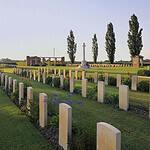
Private First Class Kermit C. Fisher was initially buried in the Castelfiorentino Military Cemetery, near Empoli. On March 3, 1949, his remains were returned to the United States, where he now rests in Stalnaker Cemetery in Glenville, West Virginia, the place where he was born and raised as a boy.

  • 1