


the editorial team
Operation “Olive”, the assault on the Gothic Line launched on the Adriatic at the end of August by the British Eighth Army, called for a diversionary action towards the Futa Pass in the central sector held by the US Fifth Army. General Mark Wayne Clark had in fact decided to break through at the Giogo Pass, a sector of the Gothic Line that appeared to be more thinly held by German troops and less fortified. To draw attention away from this real primary objective, from 9 September 1944 the Futa Pass was the target of two diversionary attacks: one from the east by the 362nd Infantry of the 91st Division (on the double line Galliano–Monte Calvi–Marcoiano and Montecarelli–Santa Lucia), the other from the west by the 133rd Infantry Regiment of the 34th “Red Bull” Division, from Legri. The 34th Division also included Second Lieutenant Thomas Wigle, of the 135th Infantry Regiment, who was killed taking a German strongpoint near Monte Frassino (Hill 665).
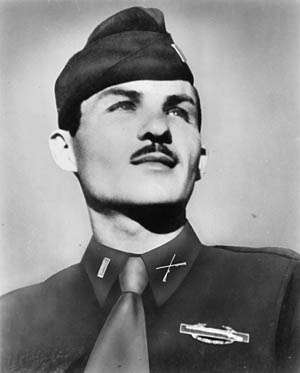
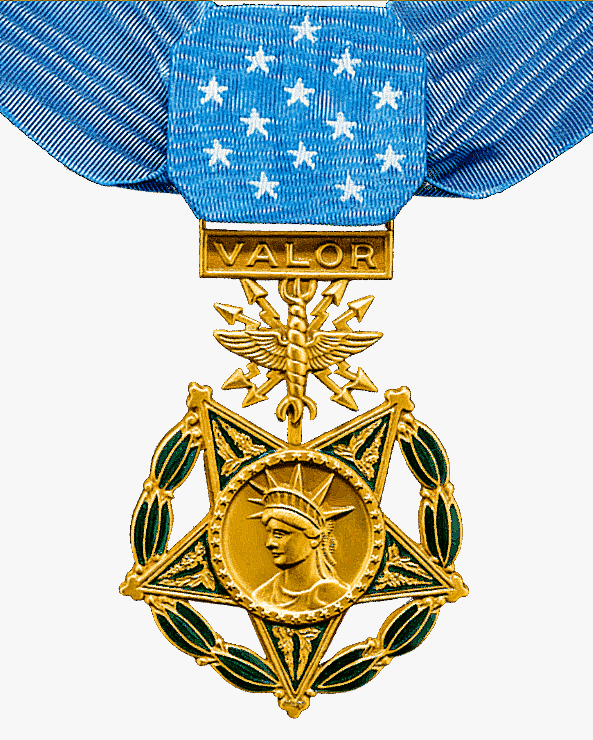
The Choice of Thomas Wigle.
Thomas W. Wigle was born on 18 May 1909 in Indianapolis, Indiana. Before the war he was a talented violinist who played with the Kansas City Philharmonic and enjoyed target shooting, though he was never fond of hunting or of conflict. It was during a visit to the historic monuments of Washington, shortly before leaving for Europe, that he understood the importance of defending his country's democratic values. With that conviction he enlisted in Detroit and became a second lieutenant in the 135th Infantry Regiment of the 34th Infantry Division, known as the “Red Bull”. There Wigle stood out for his determination and commitment, answering the demands of war with dedication.
The Assault on Mount Frassino.
On 14 September 1944, near Monte Frassino, Wigle and his platoon faced a heavily fortified German position defended by three terraced stone walls and machine guns. After two failed assaults, Wigle took command of the platoon, which had been left without an officer, and volunteered for the next attack. At the head of his men he crossed the rocky slopes under intense fire and, in a decisive move, had himself lifted over the first wall, exposing himself to the Germans so that the rest of his men could advance. In the same way he reached the second wall and then the third, behind which three buildings formed the heart of the enemy defence. He ordered his men to cover him and rushed the first building, forcing the Germans back into the second house and then into the third, where they took refuge in the cellar. Wigle was mortally wounded as he tried to go down the stairs to negotiate the surrender of the enemy soldiers. His courage and his actions allowed the platoon to take the position and capture 36 German soldiers.
Memory and Awards.
Thomas W. Wigle died on 16 September 1944, a few days after the action, and was buried at Arlington National Cemetery. For his valour in the battle he was posthumously awarded the Medal of Honor on 7 February 1945, presented to his widow Margaret, accompanied by their daughter Diana. Wigle's story is remembered as an example of loyalty and dedication, embodying the sacrifice and spirit of those who fought for the ideals of freedom and justice, which still inspire us today.
Medal of Honor Citation
For conspicuous gallantry and intrepidity at the risk of life above and beyond the call of duty in the vicinity of Monte Frassino, Italy. The 3d Platoon, in attempting to seize a strongly fortified hill position protected by three parallel high terraced stone walls, was twice thrown back by the withering crossfire. Second Lt. Wigle, acting company executive, observing that the platoon was without an officer, volunteered to command it on the next attack. Leading his men up the bare, rocky slopes through intense and concentrated fire, he succeeded in reaching the first of the stone walls. Having himself boosted to the top and perching there in full view of the enemy, he drew and returned their fire while his men helped each other up and over. Following the same method, he successfully negotiated the second. Upon reaching the top of the third wall, he faced three houses which were the key point of the enemy defense. Ordering his men to cover him, he made a dash through a hail of machine-pistol fire to reach the nearest house. Firing his carbine as he entered, he drove the enemy before him out of the back door and into the second house. Following closely on the heels of the foe, he drove them from this house to the third where they took refuge in the cellar. When his men rejoined him, they found him mortally wounded on the cellar stairs which he had started to descend to force the surrender of the enemy. His heroic action resulted in the capture of 36 German soldiers and the seizure of the strongpoint.
The citation in Italian
(The Italian translation of the citation is published on the Italian version of this page.)
The Battle of Vernio for Hill 810.
Between September 9 and 24, 1944, the hills of Vernio (PO) and Barberino del Mugello (FI) were the scene of intense fighting between the 133rd Infantry Regiment of the US 34th Infantry Division “Red Bull” and the Grenadier-Regiment 754 of the German 334th Infantry Division of the Wehrmacht. The Gothic Line, an imposing system of fortifications built by the Germans in the Italian mountains from the Tyrrhenian to the Adriatic, was one of the last barriers facing the Allied troops advancing north. Vernio, set in the lush Tuscan hills, was a strategic point on this defensive line: Hill 810. This hill, named after its height of 810 metres above sea level, was heavily fortified and was a key objective for the American soldiers seeking to open a way towards Bologna and beyond, into the heart of occupied Italy.
Hill 810 – the Poggio della Torricella – with its trenches and German positions dug into the rock, proved a hard objective to take. The US troops, supported by Italian partisans, faced bitter fighting on steep, rugged ground, under the constant threat of mines and enemy fire. Between 9 and 24 September the Americans took and lost the position several times, because of the fortified German defences and the sophisticated network of tunnels and positions that allowed the defenders to hold out for a long time, even under heavy fire.
Operations began on 10 September 1944 with the infantry regiments advancing from Legri, in the municipality of Calenzano, towards the Montepiano area. Passing Le Croci and Monte Maggiore, on 11 September they reached Sofignano and Montecuccoli, overcoming and destroying the various enemy positions. On 12 September they reached Figliule, Doganaccia and Rimaggiori. On 13 September German resistance became very strong and fierce, so much so that on the 14th the front came to a halt on these positions, above all because of a strong counter-attack by about 200 infantrymen who, shouting and firing, charged the Americans in waves and managed to stop them for the moment.
The Germans were well entrenched at three strategic points: Poggio Montetiglioli (Hill 628), Hill 791 and the Poggio della Torricella (Hill 810). On these heights they had prepared well-protected shelters for men and materiel, so that for at least a week of very hard fighting they were able to hold up the American advance towards Montepiano.
We have described the forces involved. On the German side, the 754th Grenadier Regiment of the 334th Infantry Division; on the American side, the 133rd Infantry Regiment of the 34th Infantry Division “Red Bull”.
Chronicle of the Battle.
September 14, 1944
The command of the US 133rd Regiment is at S. Margherita. The 1st Battalion is sent to take Hill 791; air observation reports that it, together with Hills 810 and 807, is heavily fortified as a blocking strongpoint. An attempt is also made to send Companies A and B to Terenzana to attack the hill from the east, while the 2nd Battalion is sent to Montetiglioli to add weight to the push from the south.
September 15
All day the artillery fires 15-minute salvoes at 10 rounds a minute, until at 17:05 both battalions jump off, but little ground is gained: Company G reaches Montetiglioli at 21:50 and Company B takes up position at Terenzana at 21:15. The 3rd Battalion takes the Mangona–Barberino road, which however remains under German fire.
September 16
At first light some elements of Company G climb to Hill 662, the Torricella saddle, but the whole front stalls: fierce clashes break out everywhere.
September 17
The battalions resume the attack with the help of the 168th, which pounds the eastern side of Hill 807 with its fire. At 13:00 Hill 810 is taken by the 1st Battalion, but an immediate counter-attack drives it back down; it attacks again and by 16:15 the hill is once more in American hands.
September 18
All day the units are busy holding their positions; many clashes take place in the narrow side valleys to prevent mutual attempts at outflanking. The 1st Battalion loses control of Hill 810.
September 19
At 04:30, after the artillery fire, the infantry moves off and by 05:15 the first objectives are reached; large numbers of exhausted Germans are captured, but Hill 810 holds out – an excellent observation post that makes them masters of the ground.
September 20
The attack is made by Companies A and B, merged because of their losses, and by Company C, while the 3rd Battalion covers them from Hill 791. It is decided to use flamethrowers and incendiary rounds, in the hope of good results against an enemy that could not be eliminated by conventional means. At 04:20, in the rain, the advance begins, and at 05:40 Company A/B takes the house on Hill 748 while the rest of the battalion pushes up Hill 810. The tanks have managed to climb the Torricella cart track and hit the strongpoints, which are retaken. The night is quiet until 04:45, when the elements on Hill 810 are counter-attacked and forced back to Hill 791.
September 21
At 08:30 the two companies start forward again but are pinned down by fire from Cardeto, until the 2nd Battalion sends some patrols to clear that pocket. In the early afternoon they run into an extensive minefield and barbed wire on the eastern slopes of the Poggio della Torricella; the advance halts again for a while, but by 18:00 both Hills 807 and 810 are firmly in American hands.
September 22
Resistance is broken. The 133rd Regiment advances towards La Crocetta and Montepiano.
The Memory of Soldiers.
The weeks of battle saw the sacrifice of many soldiers and civilians. American losses were heavy, with ninety-one soldiers killed, including the regimental commander: Colonel William S. Schildroth, the respected commander of the 133rd, was killed by a mine, leaving a deep void among the troops and an indelible memory among the local civilians. The Grenadier-Regiment 754 of the Wehrmacht's 334th Division was no less determined to resist. Hardened by the war in North Africa and deployed in Italy from early in the campaign, this unit had built well-hidden positions and forward fortifications, exploiting the mountainous terrain of the Gothic Line to slow the Allied advance.
The civilian population also suffered heavy losses from the shelling and from the mines scattered along the mountain paths. Many inhabitants of Vernio and Barberino del Mugello, and evacuees who had taken refuge in the area, were killed or wounded. Despite the difficult situation, the civilians showed great resilience, often helping the Allied forces and the Italian partisans who acted as guides or cared for the wounded. This shared effort between Allied troops and Italian civilians is commemorated every year with a ceremony honouring the sacrifices of those who fought for freedom.
The Gothic Line Memorial Park.
Today the Gothic Line Memorial Park of Vernio stands on the historic Hill 810 as a tribute to those who fell in this battle. Opened in 2003, the park still preserves the original German positions, trenches and a mortar pit, from which you can enjoy the strategic view the German troops used to watch the Bisenzio and Mugello valleys. Inside the park visitors can walk along the paths used by the soldiers and see the remains of the German bunkers, witnesses to the sophistication of the defences built to resist the Allied assault.
The park can be reached along CAI trail no. 20, which winds through the mountains to Barberino del Mugello and San Quirico di Vernio. The memorial stones and flagpoles, together with the panoramic view over the Futa Pass and the German war cemetery, create a solemn atmosphere in which visitors can reflect on the impact of this battle. The main monument is flanked by stones and plaques remembering the American soldiers and Italian partisans whose joint efforts were decisive for the outcome of the battle.
Anniversary and Celebrations.
The memory of the battle of Hill 810 still lives in the hearts of the local community. Every year on or around 20 September a commemoration is held in honour of the American and Italian soldiers who died for the liberation of Tuscany. On the 65th anniversary of the liberation, the community of Vernio named a street “Via 34th Divisione di fanteria Red Bull”, a symbolic gesture showing the importance of this division for the liberation of the town and the region.
Among the guests at the anniversary was Don Singlestad, a veteran of the battle and recipient of the Italian Medal of Valour, one of the few Americans to receive this honour. The ceremony was attended by local authorities and US military representatives such as General Rick Nash, who in a moving speech praised the commitment of the Red Bull soldiers in the fighting on Hill 810. Nash said he hoped the example of peace and prosperity that Vernio offers today could inspire other nations in conflict.
With its historical legacy, its fortifications and its monuments, the Gothic Line Memorial Park is not only a tribute to the past but a bridge between generations. It invites visitors to honour the courage and resilience of those who fought, ensuring that their sacrifice remains forever in our collective memory.


